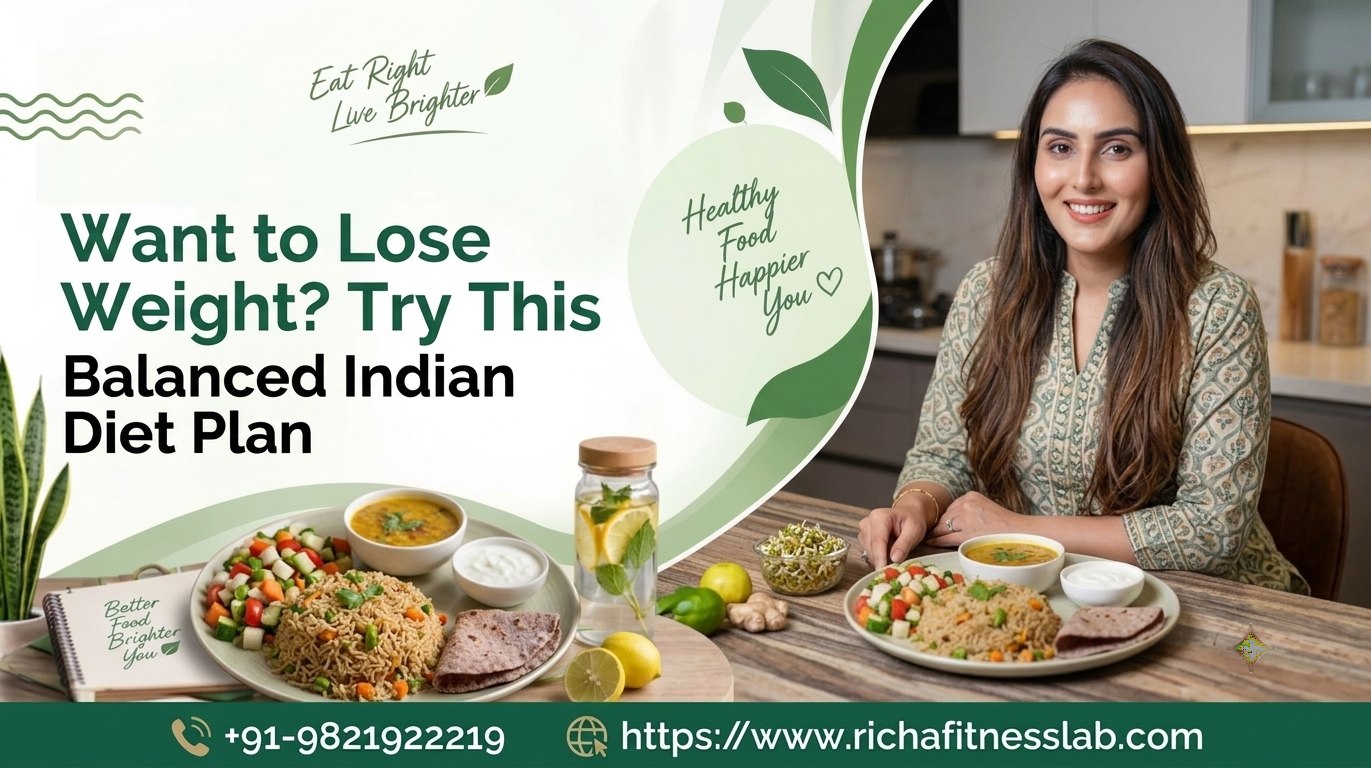
Losing weight does not mean giving up your favourite Indian foods, skipping meals, or following a strict diet that leaves you feeling hungry throughout the day. A well-planned Indian diet plan for weight loss can include roti, rice, dal, vegetables, curd, paneer, fruits, and other familiar foods while supporting gradual, sustainable weight management.
The key is to balance your meals, manage portion sizes, choose nutritious ingredients, and develop eating habits that suit your daily routine. Since Indian cuisine offers a wide variety of grains, pulses, vegetables, spices, and protein-rich foods, it is possible to build a satisfying weight loss diet without relying on expensive ingredients or complicated recipes.
At Richa Fitness Lab, the focus is on helping individuals understand how balanced nutrition and practical lifestyle changes can support their health goals. A suitable diet plan should consider food preferences, activity levels, daily schedules, and individual nutritional requirements rather than following a one-size-fits-all approach.
This guide explains how to create an Indian diet plan for weight loss, what to eat throughout the day, which habits to prioritise, and how to make healthy eating easier to maintain.
What Is an Indian Diet Plan for Weight Loss?
An Indian diet plan for weight loss is a balanced eating approach that uses traditional Indian foods to support a moderate calorie deficit while providing adequate protein, fibre, vitamins, minerals, and healthy fats.
The goal is to consume appropriate portions of nutritious foods without unnecessarily eliminating entire food groups. Depending on your preferences, the plan may include vegetarian, vegan, or non-vegetarian meals.
A balanced plan typically includes:
- Protein: Dal, beans, chickpeas, paneer, tofu, curd, eggs, fish, or chicken.
- Fibre-rich foods: Vegetables, fruits, whole grains, and legumes.
- Healthy fats: Nuts, seeds, and appropriate amounts of cooking oils.
- Complex carbohydrates: Whole-wheat roti, oats, millets, brown rice, and other grains.
- Hydration: Water throughout the day, adjusted to your needs and activity levels.
Weight loss generally occurs when the body uses more energy than it receives from food over time. However, the size of the calorie deficit, nutritional adequacy, sleep, physical activity, and consistency all influence how manageable the process will be.
Sample 7-Day Indian Diet Plan for Weight Loss
The following table provides a sample meal plan featuring common Indian foods. It can serve as a starting point for planning balanced meals, but it is not a personalised prescription.
| Day | Breakfast | Lunch | Dinner |
| Monday | Vegetable poha with curd | 2 rotis, dal, sabzi, salad | Moong dal khichdi with curd |
| Tuesday | Besan chilla with mint chutney | Rice, rajma, cucumber salad | Roti, paneer bhurji, vegetables |
| Wednesday | Oats with milk and fruit | Roti, chana masala, salad | Vegetable dalia with curd |
| Thursday | Ragi dosa with sambar | Rice, dal, bhindi sabzi | Roti, tofu curry, vegetables |
| Friday | Vegetable upma with curd | Roti, mixed dal, seasonal vegetables | Vegetable khichdi with salad |
| Saturday | Idli with sambar | Rice, chicken curry or chickpea curry, vegetables | Roti, paneer or tofu, sautéed vegetables |
| Sunday | Stuffed vegetable paratha with curd | Roti, dal, seasonal sabzi, salad | Grilled fish or paneer with vegetables and a small grain portion |
Mid-morning or evening snacks: Choose options such as fruit, roasted chana, unsalted nuts, plain yoghurt, or sprouts chaat according to your appetite.
Adjust the number of rotis, rice portions, cooking oil, and other ingredients to your individual energy requirements. Include sufficient protein at each main meal, and avoid treating this sample menu as a fixed calorie-controlled plan.
What to Eat for Weight Loss in an Indian Diet?
1. Choose Balanced Breakfast Options
Breakfast can help you start the day with a combination of energy, protein, and fibre. Instead of relying exclusively on tea, biscuits, or sugary breakfast foods, choose meals that provide more nutritional value.
Vegetable poha with curd, besan chilla, idli with sambar, oats with milk, or eggs with whole-wheat bread are all practical choices.
Combining protein and carbs can enhance meal balance and possibly prolong feelings of fullness.
2. Build a Balanced Indian Lunch
Lunch is an opportunity to combine traditional foods into a nutritious meal. A practical plate may contain vegetables, a protein source, whole grains, and a small amount of healthy fat.
You may have two little rotis with cucumber salad, seasonal sabzi, and dal, for instance. Alternatively, a bowl of rajma or chole with a suitable portion of rice and vegetables can provide carbohydrates, protein, and fibre.
The appropriate portions depend on your body size, activity level, appetite, and overall daily requirements. You do not need to remove rice or roti simply because you want to lose weight.
3. Prioritise Protein at Every Main Meal
Protein helps maintain muscular mass and enhances the flavour of meals. . Including sufficient protein is particularly useful when weight loss is combined with strength training or other regular exercise.
Indian protein-rich foods include:
- Dal, rajma, chole, and other pulses.
- Paneer, tofu, milk, and curd.
- Eggs, chicken, and fish.
- Soybeans and other soy-based foods.
Vegetarian meals may require thoughtful combinations and adequate portions to meet protein needs. People with kidney disease or other conditions affecting protein requirements should seek individualised medical or dietetic advice.
4. Include Vegetables and Fruits Daily
Vegetables and fruits supply fibre, vitamins, minerals, and a variety of beneficial plant compounds. They also add colour, texture, and volume to meals.
Choose seasonal produce such as spinach, carrots, cauliflower, beans, gourds, tomatoes, apples, oranges, guavas, and papaya. Whole fruits are generally preferable to fruit juice because they retain their fibre and tend to be more filling.
Try to include vegetables at lunch and dinner and eat different fruits throughout the week. Fresh, frozen, and appropriately prepared seasonal produce can all contribute to a balanced diet.
5. Make Smarter Snack Choices
Snacking is not automatically harmful to weight loss. What matters is your overall intake, food choices, and hunger patterns.
If you feel hungry between meals, consider roasted chana, fruit with yoghurt, a small portion of nuts, sprouts chaat, or boiled eggs. These options can offer more nutrients than frequently eating biscuits, fried snacks, or sweets.
You do not need to snack if you are comfortably satisfied between meals. Choose snacks based on genuine hunger rather than automatically eating at a particular time.
Indian Foods and Habits to Limit During Weight Loss
No single Indian food automatically causes weight gain. However, frequent consumption of calorie-dense foods in large portions can make it harder to maintain the energy balance needed for weight loss.
Consider moderating:
- Deep-fried snacks such as pakoras, samosas, and bhajiyas.
- Sugary drinks, sweetened tea, and packaged juices.
- Large portions of sweets, desserts, and bakery products.
- Excessive amounts of ghee, butter, and cooking oil.
- Frequent restaurant meals with large portions and rich gravies.
You do not need to eliminate these foods completely. Enjoying favourite dishes occasionally and in appropriate portions can make a healthy eating pattern more realistic over the long term.
How to Make an Indian Weight Loss Diet Work for Your Lifestyle
A good diet plan should be practical enough to follow on busy weekdays, during family meals, and when travelling.
Plan meals ahead. Prepare ingredients such as boiled legumes, chopped vegetables, curd, and basic gravies in advance to make balanced meals easier.
Control portions without skipping meals. Serve a suitable amount of rice, roti, protein, and vegetables instead of eliminating carbohydrates or ignoring hunger.
Stay physically active. Walking, cycling, resistance training, and other enjoyable activities can support overall health and weight management. Choose a routine appropriate for your fitness and medical status.
Prioritise sleep. Regular, sufficient sleep can help support appetite regulation, recovery, and daily energy levels.
Monitor progress realistically. Body weight can fluctuate because of hydration, digestion, menstrual cycles, and other factors. Look at longer-term trends rather than judging success by a single day’s measurement.
Focus on consistency. A flexible eating pattern that you can maintain for months is generally more useful than an extremely restrictive diet that becomes difficult to sustain.
How Richa Fitness Lab Can Help With Weight Management
Choosing an Indian diet plan for weight loss becomes easier when you understand which foods, portions, and routines suit your individual needs.
Richa Fitness Lab focuses on personalised nutrition and practical dietary guidance designed around everyday eating habits. Rather than assuming everyone should follow the same menu, a tailored approach can consider food preferences, vegetarian or non-vegetarian choices, work schedules, activity levels, and relevant health considerations.
Depending on individual needs and the service selected, nutrition guidance may help you structure meals, improve dietary variety, establish realistic routines, and make informed food choices.
People managing conditions such as PCOS, diabetes, thyroid disorders, or other health concerns may require additional individualised guidance. Dietary changes should complement appropriate medical care rather than replace it.
To explore available nutrition programmes, visit Richa Fitness Lab or call +91-9821922219 to enquire about suitable support.
Conclusion
An effective Indian diet plan for weight loss does not require abandoning traditional foods or following extreme restrictions. It involves balancing portions, eating enough protein and fibre, choosing a variety of nutritious ingredients, staying active, and building habits that fit your lifestyle.
From dal, roti, and sabzi to idli, poha, paneer, and seasonal fruits, familiar Indian foods can form part of a balanced weight management routine. The most suitable plan is one that meets your nutritional needs and remains practical over time.
With informed food choices and realistic expectations, Richa Fitness Lab can be a starting point for exploring personalised nutrition support and developing a more sustainable approach to healthy eating.
Frequently Asked Questions (FAQs)
1. Which Indian foods are best for weight loss?
Indian foods such as dal, rajma, chole, vegetables, whole-wheat roti, oats, millets, curd, paneer, tofu, eggs, and seasonal fruits can support a balanced weight loss diet. The key is to combine protein, fibre, and appropriate carbohydrate portions while moderating added fats and sugary foods. No single food guarantees weight loss; your overall eating pattern and energy intake matter most.
2. Can I eat rice and roti while following an Indian diet plan for weight loss?
Yes, you can eat both rice and roti while trying to lose weight. Neither food automatically causes weight gain. Focus on suitable portions and combine them with protein-rich foods, vegetables, and other nutritious ingredients. Whole grains can provide additional fibre, but refined grains can also fit into a balanced diet. Your total food intake, activity levels, and consistency are more important than avoiding carbohydrates completely.
3. How long does it take to lose weight with an Indian diet plan?
Weight loss timelines vary according to starting weight, food intake, physical activity, sleep, health conditions, medications, and other individual factors. Some people notice changes within several weeks, while others progress more gradually. A moderate, sustainable approach is generally preferable to rapid weight loss through extreme restriction. Track longer-term trends and focus on improvements in eating habits, energy, strength, and overall health rather than expecting identical results.
4. Is a vegetarian Indian diet sufficient for weight loss?
Yes, a vegetarian Indian diet can support weight loss when it provides appropriate portions, sufficient protein, and a variety of nutrients. Include foods such as dal, beans, chickpeas, soy, tofu, paneer, curd, and milk alongside vegetables, fruits, and whole grains. Pay attention to iron, vitamin B12, and other nutritional needs. A registered dietitian can help personalise your meals if you have specific dietary restrictions or health concerns.
Add precise sample meal portionsStrengthen the Richa Fitness Lab differentiators
Other blogs
- Best Weight Loss Coach in India
- Online Dietician Consultation
- Healthy Eating Meal Plan for Weight Loss
- Postpartum Recovery Plan for Women