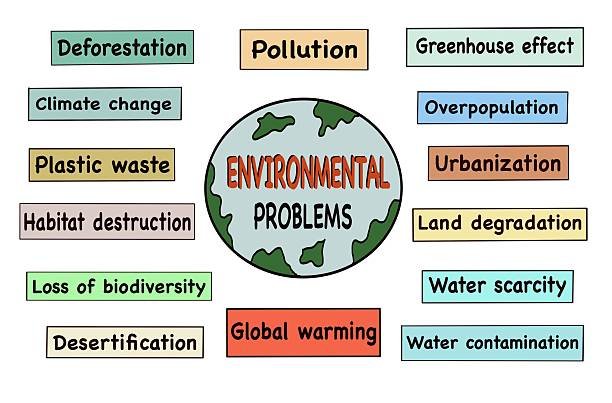
Environmental health is about understanding how the world around us affects our health. The air we breathe, the water we drink, the food we consume and the places where we live and work can all influence our well-being. These issues are at the heart of environmental health studies, which is why assignments on this subject often require more than simply gathering information and putting it into paragraphs.
If you are struggling to get started, you are not alone. You might have plenty of information but feel unsure about how to organise it, explain scientific findings or develop a convincing argument. The good news is that you do not need to tackle everything at once.
In this guide, I will walk you through the process of writing an environmental health assignment, from understanding the question to checking your references before submission. The aim is to help you produce work that is clear, well researched and genuinely shows your understanding of the subject.
Step 1: Understand What Your Assignment Requires
Before opening a textbook or searching for journal articles, take a few minutes to read the assignment brief properly. This simple step can save you hours of unnecessary research later.
Start by identifying the main topic and what your lecturer wants you to do with it. Are you expected to explain an environmental problem, assess its effects on public health or compare possible solutions? Each task requires a slightly different approach.
Pay attention to words such as:
- Describe: Explain what something is and identify its main features.
- Explain: Show how something happens or why it matters.
- Analyse: Examine the issue in detail and explore the connections between different factors.
- Evaluate: Consider the strengths and weaknesses of the evidence before reaching a judgement.
- Discuss: Explore different viewpoints and support your points with research.
- Recommend: Suggest practical actions and explain why they are appropriate.
For example, if your assignment asks you to evaluate the effects of air pollution on respiratory health, listing the causes of pollution will not be enough. You will need to examine research on respiratory conditions, consider the quality of the evidence and explain which measures could reduce exposure.
Also, check the word count, deadline, referencing requirements and marking criteria. If your lecturer has provided a marking rubric, use it as a guide throughout the writing process rather than looking at it only when you have finished.
Step 2: Choose a Topic You Can Research Properly
Environmental health is a wide subject, covering everything from unsafe drinking water to climate change. Choosing a manageable topic helps you avoid writing a little about everything without exploring anything in depth.
If you have been given a specific question, work within its limits. If you can choose your own topic, think about which issue interests you and whether enough reliable research is available.
Here are a few ideas to consider:
- Air pollution and respiratory illnesses.
- Water contamination and public health.
- Poor sanitation and the spread of infectious diseases.
- Climate change and heat-related health problems.
- Workplace exposure to hazardous substances.
- Waste disposal and environmental contamination.
- Pesticide exposure among agricultural workers.
- Noise pollution and its effects on sleep.
- Indoor air quality and respiratory symptoms.
- Environmental inequality and access to healthy living conditions.
Try to narrow your topic before you begin writing. For instance, “environmental pollution” is too broad for most assignments. A more focused topic might be “the effects of traffic-related air pollution on children living in urban areas.”
A narrower topic makes it easier to find relevant studies, compare findings and develop a clear argument. It also gives your assignment a purpose from the beginning.
Step 3: Find Reliable Information for Your Research
Once you have settled on a topic, start gathering evidence. This is one of the most important parts of the assignment because your arguments need to be supported by trustworthy information.
I would start with recognised public health organisations and academic databases rather than relying on general websites. These sources can help you understand the issue before you move on to individual research studies.
Some useful places to look include:
- World Health Organization for environmental health information and global public health guidance.
- PubMed for biomedical studies, epidemiological research and systematic reviews.
- Google Scholar for finding academic papers and tracing citations.
- US Environmental Protection Agency for information about environmental hazards and human health risk assessment.
- UK Health Security Agency for UK public health research and guidance.
- Office for National Statistics for relevant UK population and social statistics.
Your university library is another useful resource, particularly if you need access to research papers behind paywalls.
How to decide whether a source is reliable
Do not assume that every article you find is suitable for academic work. Before using a source, check who published it, whether it provides references and how closely it relates to your assignment.
Look for research that explains its methods and acknowledges its limitations. Recent publications are particularly useful when discussing current policies, exposure standards or newly emerging evidence. However, older studies can still be valuable when they establish important scientific principles.
As you research, keep a simple record of each source and note the findings that may support your argument. Recording the publication details at this stage also makes referencing much easier later.
Step 4: Plan Your Assignment Before You Start Writing
You do not need a complicated plan, but you should know what each section is supposed to achieve. Without a structure, it is easy to repeat the same points or include information that does not answer the question.
Begin by deciding on the main argument you want to develop. This is sometimes called your thesis statement. It should tell the reader what your assignment is trying to demonstrate, rather than simply announcing the topic.
For example, instead of writing, “Air pollution is harmful to human health,” you could argue that reducing traffic-related air pollution requires a combination of cleaner transport, effective emission controls and measures to protect people who face higher exposure.
That gives you several connected points to explore in the main discussion.
A straightforward assignment structure
| Section | What to write |
|---|---|
| Introduction | Introduce the topic, explain its importance and state the assignment’s aim. |
| Background | Define key terms and provide the necessary context. |
| Main discussion | Explain the environmental hazard, exposure pathways and possible health effects. |
| Critical analysis | Compare research findings and consider the strengths and limitations of the evidence. |
| Recommendations | Suggest realistic measures supported by your research. |
| Conclusion | Bring your main findings together and answer the assignment question. |
| References | List the sources cited in your work. |
This is a useful starting point, although you should adapt it to your lecturer’s instructions. An assignment involving a formal risk assessment, for example, may require a separate methodology or risk characterisation section.
Step 5: Explain How Environmental Hazards Affect Human Health
This is where you can demonstrate your understanding of environmental health rather than simply describing an environmental problem.
Start by identifying the hazard. It could be a chemical substance, a disease-causing microorganism, air pollution, excessive noise or extreme heat. Then explain how people encounter it and what health effects may follow.
Think of the process as a chain: the hazard has a source, people are exposed through a particular route, and that exposure may contribute to a health outcome.
Identify the source of the hazard
Explain where the problem comes from. In an assignment about air pollution, for example, sources might include vehicle emissions, industrial activities and the burning of fuels.
Explain how exposure occurs
People may inhale pollutants, consume contaminated water or food, or come into contact with hazardous substances through their skin. The relevant exposure route depends on the hazard being studied.
Connect the exposure to health effects
Use credible research to explain what is known about the relationship between exposure and illness. Avoid making broad claims without evidence.
For example, fine particulate matter can travel deep into the lungs, and exposure is associated with cardiovascular and respiratory disease. The World Health Organization’s air pollution fact sheet provides further information about these risks.
The WHO estimated that outdoor air pollution caused 4.2 million premature deaths worldwide in 2019. If you use this figure, include the year and explain what it represents. A dated estimate should not be presented as though it were a count of deaths in the current year.
Consider the people most at risk
Environmental hazards do not affect everyone in the same way. Children, older adults, people with existing health conditions and communities exposed to higher levels of pollution may face different risks.
Including these differences can make your discussion more meaningful. It also helps you explain why environmental health policies need to consider the circumstances of the people they are intended to protect.
Step 6: Analyse the Evidence Instead of Just Describing It
One of the biggest improvements you can make to an environmental health assignment is to move beyond repeating what researchers have said.
A good discussion considers what the findings mean, how convincing they are and whether other studies support the same conclusions. You do not need to criticise every paper, but you should show that you have thought carefully about the evidence.
Imagine that one study finds more respiratory symptoms among people living near busy roads, while another reports a weaker relationship. Rather than choosing the result that supports your argument, consider why the findings differ.
Perhaps the studies examined different populations, measured exposure in different ways or accounted for other risk factors differently. These details can affect how confidently you interpret the results.
It is also important to distinguish correlation from causation. Two things occurring together does not automatically prove that one caused the other. Researchers need to consider alternative explanations, possible confounding factors and the limitations of their study designs.
When reading a paper, pay attention to its methods, sample size, findings and stated limitations. If the researchers acknowledge uncertainty, reflect that uncertainty in your own writing.
The US EPA’s human health risk assessment guidance can help you understand how scientists identify hazards, assess exposure and evaluate potential health risks.
Remember, critical analysis does not mean disagreeing with researchers for the sake of it. It means reaching a balanced conclusion based on the evidence available.
Step 7: Suggest Solutions That Could Actually Work
After explaining the problem and assessing the research, consider what could be done about it. Your recommendations should follow naturally from your findings.
For example, an assignment on urban air pollution might discuss cleaner public transport, vehicle emission controls and better urban planning. A study of contaminated drinking water might focus on water treatment, routine testing and improvements to sanitation infrastructure.
Depending on your topic, possible interventions include:
- Educating individuals about ways to reduce avoidable exposure.
- Improving community waste collection and sanitation.
- Strengthening workplace safety procedures.
- Monitoring environmental quality and investigating hazardous exposures.
- Enforcing appropriate pollution controls.
- Improving access to clean water, safe housing and healthier public spaces.
Do not simply list these measures. Explain why they may help and who would be responsible for putting them into practice.
It is also worth considering cost, practical barriers and fairness. An intervention may work well in one location but be difficult to implement somewhere with limited resources. Similarly, a policy that improves average environmental conditions might not adequately protect communities experiencing the highest exposure.
Where possible, suggest how the results could be measured. Depending on the intervention, this might involve monitoring pollutant levels, testing water quality or tracking changes in relevant health outcomes.
Step 8: Write an Introduction and Conclusion That Stay on Topic
Once your research and outline are in place, you will have a much clearer idea of what belongs in the introduction and conclusion.
Your introduction should establish the issue without giving away every detail of the discussion. Explain why the topic matters, define any essential terms and state what the assignment will examine.
For example, an assignment about water contamination could introduce the importance of safe drinking water, identify the specific contamination concern and explain which population or location is being studied. It could then outline the purpose of the investigation.
Keep the introduction focused. Detailed statistics and extended explanations usually fit better in the main body.
The conclusion has a different job: it should bring your argument together. Return to the original question, summarise your main findings and explain what the evidence suggests.
If your research reveals limitations or uncertainty, acknowledge them. A careful conclusion is more convincing than an exaggerated statement that claims to have solved a complicated environmental health problem.
Avoid introducing new studies or entirely new arguments in the final paragraph.
Step 9: Reference Your Sources Correctly
Referencing might feel like a small administrative task, but it is an essential part of academic writing. It allows readers to trace your evidence and distinguishes your own analysis from ideas taken from other researchers.
First, check which referencing style your university requires. Harvard, APA and Vancouver are common examples, but you should follow your institution’s specific guidance.
As you prepare your references, remember to:
- Cite statistics, research findings and ideas drawn from other sources.
- Include a reference-list entry for every work cited in the text.
- Check author names, publication dates, article titles and DOI details.
- Use quotation marks for direct quotations and follow the required rules for page numbers.
- Paraphrase by explaining the original meaning in your own words.
- Check that links work and lead to the intended publications.
Changing a few words in a sentence does not make it an original paraphrase. Read the source carefully, make sure you understand the point and then explain it independently while citing the original work.
If you need additional guidance on organising a difficult brief, you can explore Environmental Health Assignment Help as one possible academic-writing resource. Whatever support you use, make sure your final submission follows your university’s rules on authorship, permitted assistance and academic integrity.
Step 10: Review Your Work Before Submitting It
Finishing your last paragraph does not necessarily mean your assignment is ready. A final review gives you the chance to catch weak arguments, unnecessary repetition and referencing mistakes.
I recommend checking your work in three stages.
First, read the assignment question again and make sure you have answered it directly. Every main section should contribute to that purpose. If a paragraph contains interesting information but does not help answer the question, consider shortening it or removing it.
Next, look at how your ideas fit together. Each paragraph should have a clear purpose, evidence where needed and an explanation of why the point matters. Check that your recommendations address the problems you discussed earlier.
Finally, proofread the presentation. Check grammar, spelling, headings, tables, word count and references. Make sure any figures have clear labels and appropriate source information.
Before submitting, use this checklist:
- I have answered the assignment question.
- My introduction explains the topic and its purpose.
- I have used relevant and credible academic sources.
- I have explained the links between environmental hazards and health outcomes.
- I have evaluated evidence instead of simply summarising it.
- My recommendations are practical and supported by research.
- I have acknowledged important limitations and uncertainties.
- My citations and reference list follow the required style.
- I have checked the word count and submission instructions.
- My work follows my institution’s academic integrity policy.
Final Thoughts
Writing an environmental health assignment can seem difficult when you are faced with scientific studies, technical terms and several different requirements. Breaking the task into manageable steps makes it easier to decide what to research, how to organise your ideas and which evidence deserves the most attention.
Start with the assignment question, choose a clear focus and build your discussion around reliable research. Explain how the environmental hazard affects people, assess the strength of the evidence and recommend solutions that make sense for the situation you are studying.
Most importantly, do not feel that you need to include every fact you discover. A well-written assignment is not the one with the most information; it is the one that uses relevant evidence to answer the question clearly and thoughtfully.
Take your time with the research, give yourself room to revise your first draft and check your sources before submission. With a little planning and a willingness to question the evidence, you can produce an environmental health assignment that demonstrates your understanding and communicates your ideas effectively.