SEO Title: LED Video Walls for Corporate Offices: A Complete Guide
Meta Description: Learn how LED video walls support corporate presentations, meeting rooms, reception branding, control rooms, and business communication.
Focus Keyword: LED video walls for corporate offices
Secondary Keywords: corporate LED display, office video wall, LED display for conference rooms, business presentation screens, corporate digital signage, LED video wall installation in Pakistan
Suggested URL: /led-video-walls-for-corporate-offices/
Introduction
Modern workplaces use visual communication to present information, support meetings, welcome visitors, and share business updates. While conventional monitors and projectors remain useful in many settings, some organizations need a larger, more flexible display area.
LED video walls provide a way to create large-format visual displays by combining multiple LED modules into a unified screen. Depending on the configuration, they can present presentations, dashboards, videos, announcements, and other business content.
For corporate offices, universities, conference venues, and commercial facilities in Pakistan, an LED video wall can serve as a presentation platform, a branding feature, or a display for operational information.
This guide explains common applications, important technical considerations, and the steps involved in selecting a suitable system.
What Is an LED Video Wall?
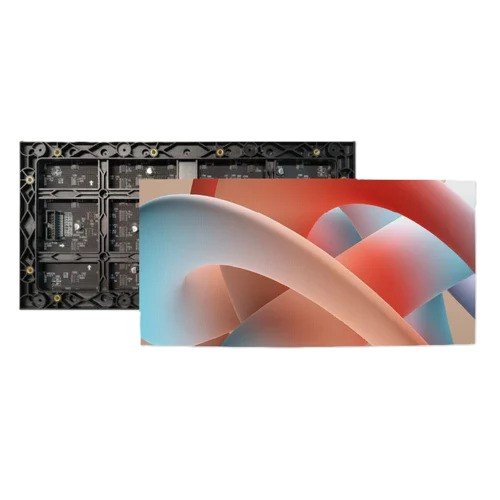
An LED video wall is a large display made from interconnected LED modules or panels. Unlike a conventional television with a fixed screen size, a modular LED system can be configured to suit the dimensions and requirements of a particular installation.
The final image is produced by the combined display modules, while a control system manages the content sent to the screen.
LED video walls are used in corporate boardrooms, reception areas, training rooms, auditoriums, conference centers, and monitoring environments.
The appropriate configuration depends on viewing distance, required image detail, room lighting, installation space, and the type of content being displayed.
1. Create a Strong Corporate Reception Area
A reception area is often the first physical point of contact between a company and its visitors. A well-designed display can help communicate the organization’s identity and provide useful information.
An LED video wall may display:
- Company branding and welcome messages.
- Corporate videos and product demonstrations.
- Service introductions.
- Event schedules and visitor information.
- Approved announcements and business milestones.
The display should support the reception experience rather than overwhelm it. Content should remain professional, readable, and consistent with the company’s brand guidelines.
Screen dimensions, pixel pitch, and viewing distance should be considered together to ensure that logos and text appear clear from the intended viewing positions.
2. Improve Boardroom Presentations
Corporate meetings often involve financial reports, strategy documents, product demonstrations, charts, and collaborative discussions.
A suitably specified LED display can provide a large visual area for presentations and shared information. It may be particularly useful in boardrooms where participants need to view content from different parts of the room.
When planning a boardroom installation, consider:
- The distance between the screen and the furthest seat.
- The smallest text or data that must be readable.
- The meeting-room lighting.
- The devices and presentation systems that need to connect.
- Whether multiple content sources must be shown simultaneously.
- The audio and video equipment already installed.
A larger display does not automatically guarantee better readability. Pixel pitch, image resolution, source quality, and the content layout all influence the result.
3. Support Hybrid Meetings and Video Conferencing
Hybrid meetings combine participants in the office with colleagues or clients joining remotely. A well-planned display system can make remote participants, shared documents, and presentation material easier to view.
For this application, the LED video wall is only one part of the solution. Camera placement, microphones, speakers, conferencing software, and system compatibility also matter.
Organizations should determine whether they need a single large display, separate screens for participants and presentation content, or a more complex audiovisual arrangement.
Before installation, test the entire setup with the meeting software and devices that employees will use regularly.
4. Display Business Data and Operational Dashboards
Some organizations use visual displays to communicate operational information across teams. Depending on the industry and the system configuration, a video wall may present:
- Sales performance dashboards.
- Production and inventory summaries.
- Project status information.
- Logistics and service updates.
- Monitoring dashboards.
- Internal announcements and safety information.
Information should be displayed according to the audience’s needs. A reception display may require simple, public-facing content, while an operations room may need detailed information for authorized staff.
Businesses should also review data access, screen permissions, privacy requirements, and the risks of displaying confidential information in public areas.
5. Choose the Right Pixel Pitch
Pixel pitch is the distance between neighboring pixels in an LED display. It is commonly expressed in millimetres. A smaller pixel pitch generally supports finer detail at closer viewing distances, while larger-pitch displays can be appropriate for installations viewed from farther away.
For corporate offices, selecting pixel pitch should begin with the intended viewing distance and the smallest information that needs to be readable.
For example, a boardroom where participants sit close to the display may require a finer-pitch solution than a large auditorium where the screen is viewed from much farther away.
There is no single pixel pitch that suits every office. Suppliers should assess the room layout, content requirements, and budget before recommending a configuration.
6. Consider LED Video Walls vs. Projectors
Projectors and LED video walls serve different requirements. A projector may be practical in a room where the lighting can be controlled and the display is used occasionally. An LED video wall may be more appropriate when a large, bright, modular display is required.
| Consideration | LED video wall | Projector |
|---|---|---|
| Display construction | Modular LED panels | Projected image on a suitable surface or screen |
| Ambient light | Depends on display specifications, but many systems can operate well in bright rooms | Image visibility can be affected by ambient light |
| Screen dimensions | Can be configured using modular panels | Depends on projector, lens, throw distance, and screen |
| Installation | Requires appropriate mounting and electrical planning | Requires projector placement and a suitable projection surface |
| Image detail | Depends on pixel pitch and display configuration | Depends on resolution, optics, and projection conditions |
| Maintenance | Requires display-system inspections and technical support | Requires projector-specific maintenance and component care |
The best choice depends on room conditions, usage frequency, required image quality, and total cost.
7. Plan the Installation Carefully
Installing a corporate LED video wall requires more than mounting panels on a wall. The design should account for structural support, electrical supply, cooling, cable routing, service access, and integration with existing audiovisual equipment.
A professional installation process generally includes:
- Site assessment: Measure the available space and determine the viewing positions.
- Requirements planning: Define content types, display dimensions, connectivity, and control needs.
- Technical specification: Select suitable modules, pixel pitch, controller, and mounting arrangement.
- Installation preparation: Confirm structural support, power requirements, cable routes, and service access.
- System installation: Assemble and connect the display according to the approved design.
- Configuration and testing: Check image alignment, colors, signal inputs, and content playback.
- Handover: Provide operating guidance and explain maintenance and support arrangements.
The exact process varies with the size and complexity of the project.
8. Budget for the Complete System
Businesses should compare complete project costs rather than only the quoted price per panel or square foot.
A video wall budget may include:
- LED modules and cabinets.
- Control equipment and signal processing.
- Mounting structure and installation.
- Electrical work and cable management.
- Content-management or presentation integration.
- Transportation and commissioning.
- Warranty coverage and maintenance.
- Spare modules or components, where appropriate.
The final cost depends on the screen dimensions, pixel pitch, component specifications, installation complexity, and support requirements.
Request an itemized quotation so that different proposals can be compared on an equivalent basis.
9. Plan for Long-Term Reliability
A corporate display may be used for many hours each day, so ongoing support should be considered before purchase.
Organizations should ask suppliers about warranty terms, technical support, spare-part availability, repair procedures, recommended operating conditions, and maintenance requirements.
Routine checks can include verifying image quality, reviewing connectivity, keeping ventilation areas clear, and monitoring any recurring faults.
Employees should also have clear instructions for operating the control system and reporting issues. This reduces the risk of accidental configuration changes or unnecessary downtime.
10. How to Select a Corporate LED Display Provider in Pakistan
When comparing LED display providers, businesses should evaluate more than the advertised price.
Ask for details about:
- Display specifications and intended viewing distance.
- Module and controller compatibility.
- Installation planning and commissioning.
- Relevant project experience.
- Warranty and after-sales support.
- Maintenance arrangements.
- Spare-part availability.
- The complete project quotation.
It is useful to share photographs or measurements of the intended installation area, explain how the display will be used, and identify the devices that must connect to it.
PAK SMD SCREEN offers SMD and LED display solutions for business applications. Companies planning a reception display, boardroom installation, or large-format visual system can discuss their requirements before choosing a configuration.
Conclusion
LED video walls can support corporate presentations, visitor communication, internal dashboards, and business branding. To get the best result, organizations need to match the display configuration to the room, viewing distance, content requirements, and installation environment.
A clear technical specification and a complete installation plan can help businesses avoid mismatched equipment and make more informed purchasing decisions.
Visit PAK SMD SCREEN to explore LED display solutions and discuss your corporate display project.