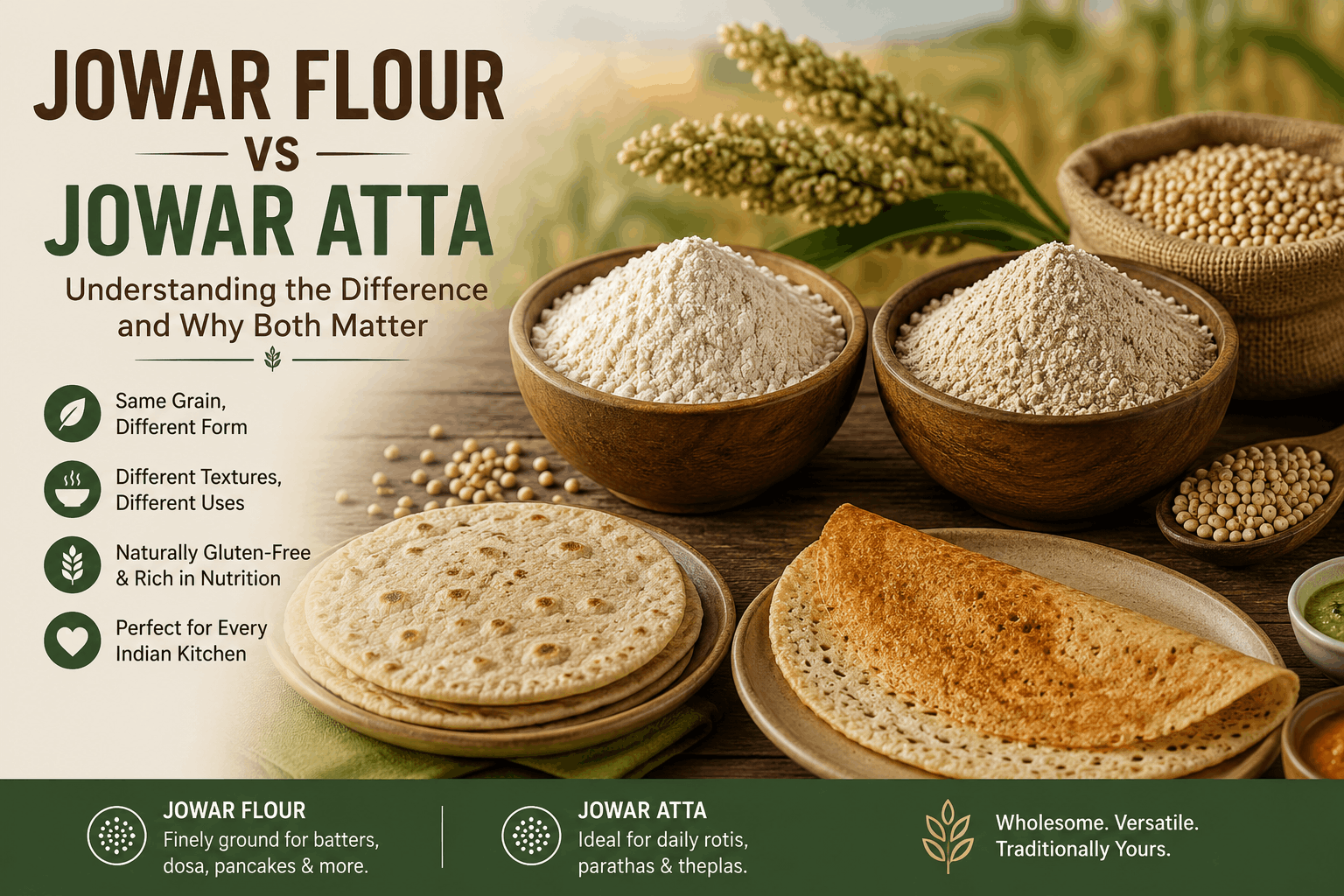
Sorghum has been a staple grain across India for centuries — ground into flour in different consistencies depending on the regional cooking tradition and the dish being prepared. Walk through Maharashtra and you’ll find coarsely ground versions used for bhakri. Travel through Karnataka and a finer grind appears in dosas and rotis. In North Indian kitchens, the same grain shows up under the name jowar atta, used for flatbreads in much the same way wheat atta is used. The proliferation of jowar products in urban Indian markets has created a small but real confusion — jowar flour, jowar atta, jowar rava — which product is which, and which one do you actually need for the dish you’re trying to make? Clearing up this confusion is the first step toward using jowar consistently and well in an everyday kitchen. The Grain Underneath Both Products Both jowar flour and jowar atta come from the same source — sorghum, a drought-resistant grain cultivated across the Deccan plateau, Rajasthan, and several other Indian agricultural regions for thousands of years. The grain itself is nutritionally significant in ways that have made it a dietary staple in physically demanding farming communities long before modern nutrition science had vocabulary for what made it valuable. Sorghum is naturally gluten-free, which means it’s digestible for people who experience sensitivity to wheat without meeting the clinical threshold for celiac disease — a category that is considerably larger than formal diagnosis numbers suggest. It has a lower glycemic index than refined wheat, which produces a more stable blood sugar response after meals. It’s a meaningful source of dietary fibre, iron, and B vitamins. And unlike many health grains that require entirely new recipes and cooking techniques, jowar works in dishes that Indian households already know how to make. What Jowar Flour Typically Refers To In most product contexts, jowar flour refers to a finely ground form of sorghum — ground to a consistency similar to or slightly coarser than regular wheat flour. This fine grind makes it suitable for recipes where a smooth, even texture is required — certain types of flatbreads, batter-based preparations, and dishes where a coarser grind would disrupt the texture. Fine jowar flour blends well with other flours for people easing into jowar-based cooking. A 50-50 blend of jowar flour with regular wheat flour produces a roti that’s nutritionally improved from the wheat-only version while maintaining a familiar enough texture that most family members adapt without resistance. As the household becomes comfortable with the grain, the ratio can shift further toward jowar until the switch is complete. What Jowar Atta Refers To in the Indian Kitchen Context Jowar atta is the term more commonly used in North Indian cooking contexts, where atta specifically carries the connotation of flour used for roti and paratha — the daily flatbread staple. The consistency of jowar atta is typically similar to whole wheat atta, finely enough ground to produce a workable roti dough that rolls without cracking excessively. Understanding the full range of jowar atta uses goes beyond roti — it can be incorporated into thepla, certain paratha fillings, and mixed-grain dough preparations. For a complete picture of how jowar atta functions across Indian recipes, the blog resource on jowar atta from 10on10foods covers common uses and health benefits in a format that’s practically useful for home cooks introducing the grain into regular cooking. How to Use Both in a Real Weekly Routine The most practical approach to incorporating jowar into everyday cooking is to treat it the same way regular atta is treated — as the default flour for flatbreads and related preparations — rather than keeping it as a specialty ingredient used for occasional health-motivated experiments. For rotis and parathas, jowar atta used alone or in combination with a small proportion of wheat flour for binding produces good results with minimal adjustment from regular wheat roti technique. The dough benefits from slightly more water than wheat atta dough and performs better with a short resting period after kneading. For batter-based dishes — dosa, uttapam, or certain pancake-style preparations — the finer jowar flour works more reliably than the coarser rava form, producing a batter that spreads evenly and cooks to a consistent texture. The Nutritional Case Across Both Forms Whether used as jowar flour in batter preparations or as jowar atta in daily rotis, the nutritional contribution remains consistent across both forms — because the grain itself hasn’t changed, only the grind. The fibre content, the lower glycemic impact, the iron and B vitamin profile, and the gluten-free characteristic all carry through into both product forms. This nutritional consistency is worth understanding because it means the choice between jowar flour and jowar atta doesn’t need to be a nutritional calculation — it’s a cooking application decision. Use the form that fits the dish you’re making. The nutritional benefit follows automatically. Where 10on10foods Fits Into This For households ready to commit to jowar as a regular pantry ingredient, sourcing matters as much as the product form. Minimally processed jowar flour that retains the grain’s natural properties performs better nutritionally than versions that have been over-milled or stored in ways that degrade the fibre and fat content of the bran. 10on10foods has made both jowar flour and jowar atta accessible for everyday household use — consistently processed and ready to cook without additional preparation steps. For households building jowar into a regular weekly cooking routine rather than using it occasionally, this consistency of supply and quality is practically significant. The Takeaway Jowar flour and jowar atta are the same grain in formats tailored for different cooking applications. Understanding which form suits which dish removes the last remaining barrier to using sorghum consistently — and once it becomes a regular part of the weekly cooking routine, its nutritional contribution accumulates in ways that occasional use never achieves.
Jowar Rava Benefits – The Case for Adding Sorghum to Your Daily Meal Rotation
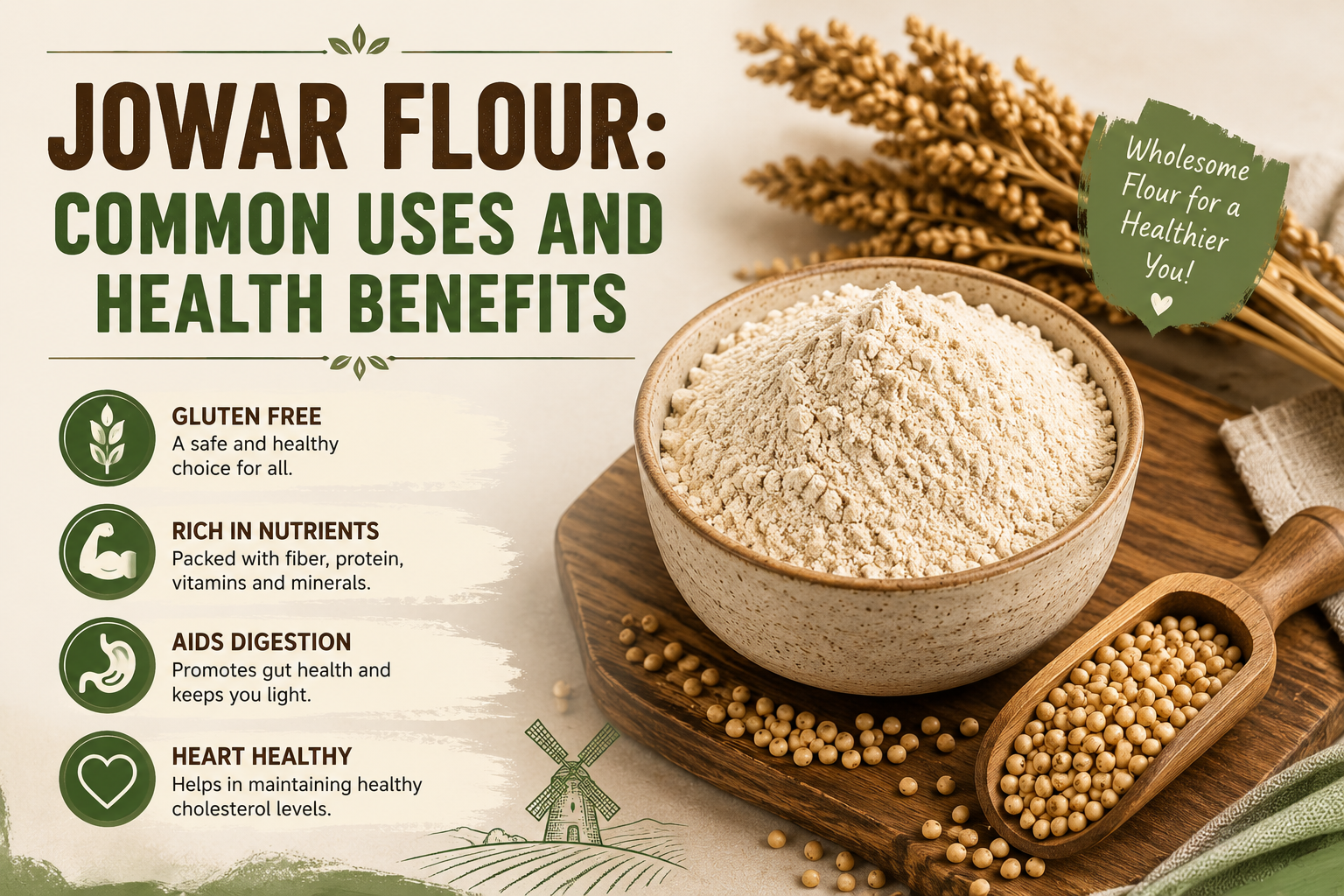
The Real Case for Jowar Rava – Beyond the Health Food Label There’s a category of ingredient that gets talked about endlessly in wellness circles but rarely makes it into actual daily cooking. Jowar rava risks falling into this trap — discussed in nutrition blogs, mentioned in diet plans, but somehow never quite becoming a kitchen staple for the majority of households that could genuinely benefit from using it regularly. The problem isn’t the ingredient. It’s the way it gets presented — as a health food rather than simply a useful, practical grain that happens to be nutritionally superior to what most people are already using. Where Jowar Rava Sits in Indian Cooking Tradition Jowar — sorghum — has been cultivated and consumed across India, particularly in Maharashtra, Karnataka, and Andhra Pradesh, for centuries. It was never a specialty ingredient in the regions where it originated. It was simply what people ate — ground into bhakri, cooked into porridge, or used in everyday preparations the same way wheat or rice was used elsewhere. Jowar rava is the coarsely ground form of this grain, positioned similarly to semolina or broken wheat in terms of how it functions in a recipe. It works in upma, khichdi, dosa batter, and porridge — dishes that already exist in most Indian households’ meal rotation — which means adding it doesn’t require learning an entirely new category of cooking. Breaking Down the Jowar Rava Benefits The case for jowar rava doesn’t rest on a single dramatic nutrient. It’s built on a combination of qualities that work together practically in the context of how most Indian people eat. First, the gluten-free profile. Jowar rava contains no gluten, making it a reliable option for anyone who experiences wheat sensitivity — the kind that causes bloating, sluggishness, or digestive discomfort after meals without rising to the level of diagnosed celiac disease. This is more common than clinical numbers suggest, because most people manage the symptoms without connecting them to their wheat intake. Second, the fibre content. Jowar rava retains the grain’s natural fibre much more completely than refined semolina or polished rice. This slows digestion, extends satiety, and produces a more stable blood sugar response after meals — particularly relevant for the large and growing segment of urban Indian adults managing pre-diabetic or insulin-sensitive conditions. Third, the mineral contribution. Iron, phosphorus, and B vitamins are present in meaningful quantities in jowar — nutrients that tend to be stripped away in refined grain processing but remain intact in minimally processed rava. Who Benefits Most From Using It Regularly The practical jowar rava benefits are not limited to one demographic. People managing blood sugar find the lower glycemic response immediately relevant. Individuals with wheat sensitivity get a familiar-cooking grain alternative that doesn’t require adjusting to an entirely different cuisine. Working professionals eating busy, high-carbohydrate diets benefit from the sustained energy that a fibre-dense grain provides compared to refined semolina or white rice. Children being introduced to diverse grain options adapt well to jowar rava upma because the texture and taste are close enough to familiar dishes that the transition rarely becomes a mealtime problem. The Comparison With Semolina That Matters Semolina — the sooji used in most Indian upma preparations — is made from refined durum wheat. It’s processed to remove the outer bran and germ, which is precisely where most of the fibre and micronutrients live. What remains is a refined starch that cooks smoothly and tastes familiar but contributes relatively little nutritionally beyond carbohydrate calories. Jowar rava, by contrast, is a whole grain product. The processing is minimal — the grain is cleaned and ground coarsely, without the refining steps that strip semolina of its nutritional value. Same cooking role in the kitchen. Substantially different nutritional outcome on the plate. Making the Switch Without Disrupting the Kitchen The transition from semolina to jowar rava in everyday upma or khichdi is straightforward. The tempering process remains the same. The vegetable additions, if used, remain the same. Water ratio adjusts slightly — jowar rava typically absorbs a little more liquid than semolina during cooking. The final dish comes out slightly more textured and less sticky than semolina upma, which most people find they prefer after a few tries. 10on10foods has made jowar-based products accessible for households looking to make this transition without sourcing from specialty stores — consistent grain quality in a form that’s ready for everyday cooking. The Bottom Line Jowar rava doesn’t need the health food label to justify its place in a kitchen. It’s a practical, versatile grain that cooks like familiar Indian breakfast staples and delivers nutritional value that those staples don’t. That combination alone makes it worth trying — and once tried, worth keeping.