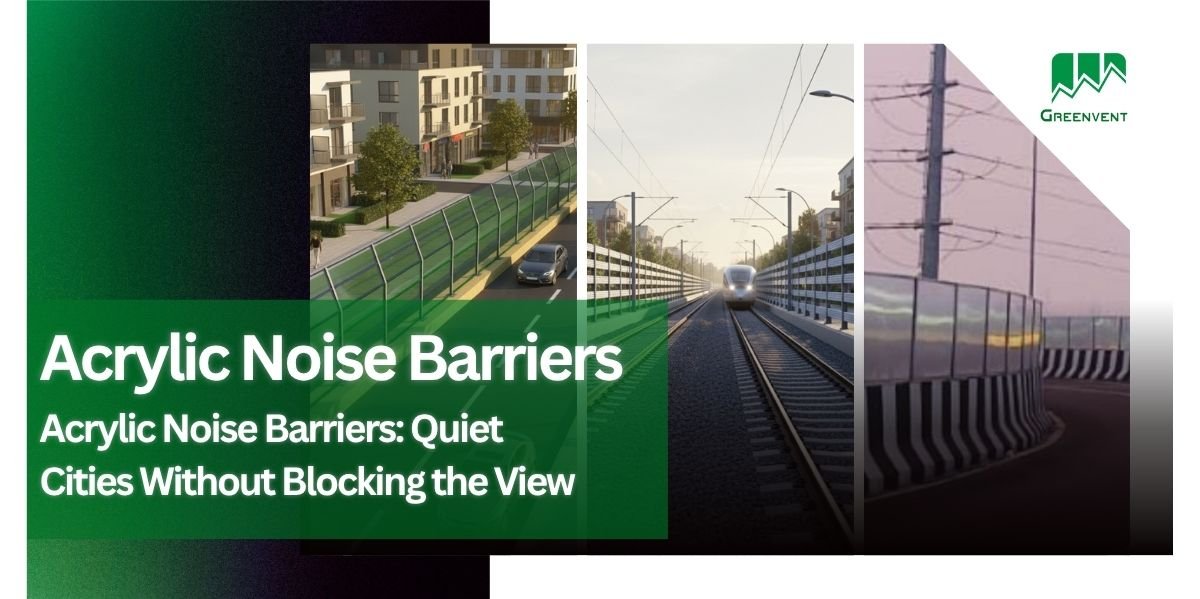
A noise barrier may seem simple once installed alongside a highway, metro rail, railroad, or any other busy route. However, there are many things that need to be done to ensure that the structure is properly installed. This is because the noise barrier must meet the site requirements, be compatible with the structural arrangements, and match the surrounding environment. For this reason, selecting an acrylic noise barrier manufacturer is critical from the start. Producing transparent panels is only one part of the job. A good understanding of the material, fabrication, and practical project requirements matters just as much, and Greenvent brings these aspects together in its approach to noise barrier manufacturing. Why Does the Choice of Manufacturer Matter for Noise Barriers A noise barrier is not some device that is simply mounted and then forgotten about the next day. It becomes an integral part of the surrounding infrastructure after being mounted next to a busy road or transport corridor. This is why pre-production decisions matter. A manufacturer needs to know the exact mounting location, supporting construction, available space, and required dimensions. A small error during pre-production can be very hard to fix at the mounting stage. Collaboration with an acrylic noise barrier manufacturer makes communication easier in case the project has special requirements. They manufacture the barriers by considering all the elements What Makes Acrylic Suitable for Noise Barrier Applications Acrylic gives a useful combination of practical performance and visible openness, which makes it a thrilling material for contemporary noise barrier tasks. This difference will become important alongside highways, metro routes, and other busy infrastructure areas. Clear Visibility: Keeps the surrounding roads, buildings, and landscape visible. Natural Light: Acrylic allows daylight, supporting a brighter and more open appearance. Modern Appearance: Its look suits nicely with highways, metro corridors, and bridges. Open Surroundings: Barriers create separation without making it look blocked. Urban Suitability: They work nicely where infrastructure is close to residential homes. These traits make acrylic a realistic choice when noise control is combined with visibility and a natural look. How Does Product Quality Affect Barrier Performance The quality of a noise barrier can be better understood if installation is considered as a whole system rather than as an assembly of panels. Such structures are installed outside for years, where they are exposed to the sun, rain, dust, varying temperatures, and other elements of the environment. The material used, therefore, is one of the first aspects to consider. The quality of the acrylic used, precision of fabrication, finish, and how various parts of the structure fit each other affect the quality of the final product. An acrylic noise barrier manufacturer considers such aspects while manufacturing and provides the best noise barriers. Can the Barrier Design Be Adapted to Different Projects Infrastructure projects are usually not accompanied by the same conditions. A barrier that is set up on a highway in a residential area will have completely different conditions compared to a barrier that will be set up along an elevated metro rail. The available space and the required height or length can differ depending on the location. Even the surrounding buildings and the overall look of the area matter. That is why a standardized design isn’t always the best solution. Customization allows for greater freedom to work with the actual situation rather than forcing the situation to fit a certain product specification. Greenvent considers this aspect when designing noise barriers. How Can Proper Manufacturing Improve the Overall Installation It is not only the installation that must be prepared to ensure a successful project. Many of the preparations take place during the manufacturing process. The dimensions need to be precise, the components need to match the layout, and the structure needs to be known prior to manufacturing. When all of this is taken into account, the installation crew will face fewer surprises during the actual installation. This is even more relevant for larger projects. Proper communication between the project team and the acrylic noise barrier manufacturer comes into play when site conditions require adjustments. How Does Greenvent Approach Acrylic Noise Barrier Solutions The Greenvent perspective on noise barrier manufacturing comes from practical experience that is important when a project does not fall into the category of the usual specifications. Highway corridors, railway lines, and metro construction have unique surroundings and engineering requirements. The same solution cannot be applied to all types of construction. The manufacturer considers application, size, design aspects, transparency, and installation issues before developing the noise barrier solution. What Makes Greenvent a Practical Choice for Infrastructure Projects An acrylic noise barrier manufacturer becomes useful when it understands the environment in which its product will be used. Greenvent’s approach focuses on the practical requirements surrounding noise barrier projects rather than treating the product as a simple panel that looks the same in every situation. Dimensions, transparency, supporting structures, site conditions, and the appearance of the finished installation all deserve attention. That becomes particularly relevant in busy urban areas, where a noise barrier has to fit into an existing landscape instead of appearing as an unwanted structure. The manufacturer works with these considerations while developing its solutions, giving infrastructure projects room to address their individual requirements. What Should Be Considered Before Selecting a Manufacturer An acrylic barrier may appear incredible as soon as mounted, but its look only tells part of the tale. Before deciding on an acrylic noise barrier manufacturer, it is worth searching at the material, production procedure, venture revel in, and method to set up. Material Quality: The acrylic specification desires to be appropriate for the intended application and the situations. Fabrication Accuracy: Precise cutting, sizing, and completing assist the manufactured components correspond nicely. Design Flexibility: Different websites carry different dimensions, layouts, heights, and supporting arrangements. Installation Planning: Manufacturing and installation work closely together, so right coordination lower adjustments. These factors provide a more sensible basis for judging a manufacturer rather than genuinely looking at area or evaluating product descriptions. Overall, selecting an acrylic noise barrier manufacturer
Metro Noise Barrier Manufacturers | Greenvent
Metro rail has changed how people travel through busy cities, but the regular movement of trains also creates noticeable noise. The sound becomes more prominent when metro tracks pass close to residential buildings, offices, schools, hospitals, or other occupied spaces. Managing this noise is therefore an important part of railway infrastructure planning. Metro noise barrier manufacturers help address this concern by developing barrier systems that interrupt the direct path of sound between moving trains and nearby areas. Greenvent provides sound barrier solutions designed for infrastructure applications, with a focus on helping reduce the impact of transportation noise. How Do Metro Noise Barriers Help Reduce Sound Transmission A metro noise barrier is a device that disrupts the clear path along which sound travels from a moving train to nearby areas. Rather than allowing sound waves to spread openly in the railway zone, this barrier stops the propagation of some sound waves and allows the passage of a limited number of sound waves through it. Which Features Matter in an Effective Metro Noise Barrier A noise barrier installed beside a metro route must withstand more than sound. The following features are especially applicable when assessing a noise barrier device: Sound Reduction: Suitable barriers help limit the transmission of railway noise into surrounding areas. Structural Strength: A sturdy shape helps the barrier stay stable outdoors and under various conditions. Weather Resistance: Resistance to changing weather conditions supports durability in outdoor installations. Long-Term Maintenance: Practical protection helps maintain the condition and overall performance. Together, these functions create a noise barrier that addresses both the acoustic and practical needs of a railway. How Are Metro Noise Barriers Designed for Different Railway Environments Metro corridors differ in their physical environment, so a barrier system that works in one area may not work in another. While some railways cross open grounds, others may cut through buildings, roads, shopping areas, or even residential zones. The elevated metro corridor differs in design from the one on the ground. Factors such as space availability, track configuration, existing structures, barrier height, and the location of sensitive areas all affect the final design. An accurate assessment of the situation helps determine what the barrier is expected to do. What Materials Are Commonly Used for Metro Noise Barriers The choice of material affects several aspects of a noise barrier, including sound reduction, durability, appearance, weight, and maintenance. Different metro projects use different materials depending on the surrounding environment and technical requirements. Transparent panels, metal-based systems, composite materials, and other engineered solutions are used in various noise-control applications. In some locations, visibility through the barrier matters, while other sites prioritize durability or specific acoustic requirements. Material selection is therefore closely connected with the conditions of the railway corridor rather than being based on appearance alone. A suitable material balance between noise control, structural performance, environmental resistance, and practical maintenance. What Factors Matter When Selecting Metro Noise Barrier Manufacturers The manufacturer plays an important role in determining how well a noise barrier solution fits the requirements of a metro project. These factors help provide a clearer picture of what a manufacturer brings to a railway noise-control project: Manufacturing Experience: Experience with noise barriers provides familiarity with different requirements. Product Quality: Consistent manufacturing helps maintain reliable quality across different barrier components. Acoustic Performance: Appropriate acoustic characteristics support the intended noise-control requirements. Customized Solutions: Project-specific designs address differences in layouts and surrounding environments. Installation Support: Technical assistance helps ensure that the system is installed according to its design. Project Requirements: Understanding the site helps align the barrier with the practical conditions of the metro. Considering these aspects gives the project a more complete understanding of the capabilities and suitability of metro noise barrier manufacturers. How Can Proper Noise Barrier Installation Improve Noise Control A well-designed barrier relies on proper installation to deliver the expected performance. Regular post-installation inspections help identify loose components, damage, or other issues that affect the barrier over time. Correct Placement: Positioning the barrier between the railway and nearby areas helps interrupt the sound. Barrier Height: Appropriate height helps block sound traveling from the train towards surrounding locations. Proper Panel Alignment: Correct alignment helps maintain continuity between adjoining barrier sections. Reduced Sound Gaps: Minimizing openings helps prevent sound from passing through unnecessary spaces. Regular Maintenance: The inspection helps maintain the condition and effectiveness of the overall system. Proper installation connects the barrier design with the actual railway environment, helping noise barrier solutions perform consistently throughout their service life. Why Is Professional Noise Control Important Around Metro Corridors Metro networks are generally located in or around populated areas because they connect people to residential, commercial, and public destinations. As a result, railway infrastructure often exists alongside buildings and other spaces where controlling environmental noise matters. A professionally planned noise barrier provides a practical method of reducing the amount of train noise traveling towards these surroundings. Its performance depends on the complete system rather than one individual feature, which makes design, material selection, positioning, installation, and maintenance important parts of the process. Working with experienced metro noise barrier manufacturers helps bring these requirements together in a structured manner. Greenvent supports this infrastructure need by focusing on sound barrier solutions for transportation applications. How Does Greenvent Provide Noise Barrier Solutions for Metro Projects Greenvent focuses on sound barrier solutions for infrastructure and transportation applications where controlling environmental noise matters. Metro projects often involve changing site conditions, limited installation space, nearby buildings, and specific structural requirements, so the barrier solution fits the actual project. Metro noise barrier manufacturers work around these practical considerations while providing noise barrier systems intended to reduce sound transmission from transportation sources. Its focus on sound barrier applications makes it relevant to projects where railway or metro noise needs to be managed around surrounding areas. Overall, metro railway noise is a practical concern wherever busy rail corridors run close to populated areas. Noise barriers help manage this concern by creating a physical interruption between moving trains and nearby locations, reducing direct sound transmission.