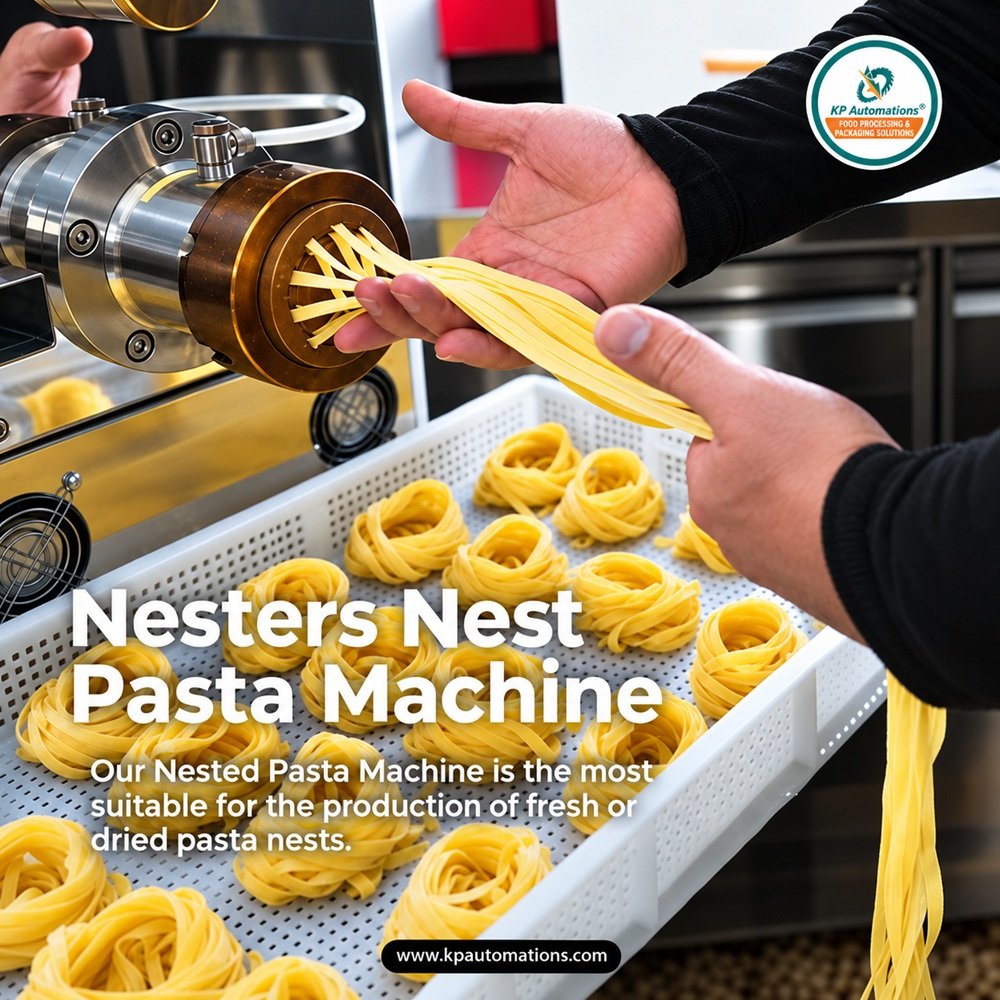
Choosing a pasta making machine is an important step for any business planning to enter or expand in the pasta manufacturing industry. However, successful production depends on more than the machine’s rated capacity. Manufacturers must also consider product consistency, operating efficiency, drying performance, packaging requirements, and the ability to meet customer demand reliably. For a growing pasta brand, food processing company, or industrial manufacturer, the right equipment should support both present production needs and long-term business objectives. A well-planned system can help transform raw ingredients into finished products through a coordinated process that includes mixing, extrusion, shaping, drying, cooling, and packaging. KP AUTOMATIONS provides pasta machinery and integrated processing solutions for commercial and industrial applications. With equipment options for different production capacities, the company supports businesses looking to establish new manufacturing facilities or strengthen existing production operations. Why the Right Pasta Making Machine Matters A commercial pasta business needs equipment that can produce the required quantity while maintaining consistent product characteristics. Variations in dough preparation, extrusion, shaping, or drying can affect the final result, making process control an important part of equipment selection. A suitable pasta making machine should be evaluated according to the products being manufactured, the expected output, available factory infrastructure, and the level of automation required. Before selecting equipment, manufacturers should define: The pasta varieties they intend to produce. The expected hourly and daily production targets. The required product dimensions and shapes. The planned operating schedule. The available workforce and technical skills. The drying and packaging capacity required. The possibility of future production expansion. These details help establish a practical production plan and prevent businesses from investing in equipment that does not match their actual requirements. Start With a Clear Production Target Production capacity is one of the first factors buyers compare when evaluating pasta machinery. Nevertheless, the highest-rated machine is not automatically the best choice for every business. A small manufacturer supplying local retailers may need a compact production system, while a large food processing company serving wholesalers and institutional buyers may require an industrial line with higher throughput and more automation. KP AUTOMATIONS lists pasta production equipment across different capacity ranges, including compact machines, mid-size systems, and high-capacity industrial lines. The appropriate option depends on the manufacturer’s production targets and the configuration of the complete line. When estimating capacity, consider more than the number of kilograms produced per hour. Allow for cleaning, product changeovers, routine inspections, maintenance, and planned downtime. The output of the dryer and packing section must also be considered because these stages can limit the performance of the overall operation. A realistic production target gives manufacturers a more useful basis for comparing equipment and planning operating costs. Match the Machine to Your Product Range Different pasta products can require different dies, cutting arrangements, and handling methods. A manufacturer planning to produce macaroni may have different equipment requirements from a business focused on spaghetti, linguine, fusilli, or specialty shapes. A fully automatic pasta making machine can support a more organized production process by automating selected operations, depending on its design and configuration. Interchangeable dies and suitable cutting systems may also provide flexibility for producing multiple varieties. Before choosing a machine, manufacturers should confirm: Which pasta shapes are supported. Which dies and inserts are available. How product dimensions can be adjusted. How much time a product changeover requires. Whether additional tooling is needed for future products. How changes in the product range affect drying and packing. This evaluation is particularly important for businesses supplying private-label customers or retailers with specific product requirements. Selecting machinery around a defined product portfolio can make production planning more practical and help avoid unnecessary equipment modifications later. Improve Process Control With an Automatic Pasta Machine An automatic pasta machine can reduce repetitive manual operations and help coordinate key production stages. Depending on the configuration, automation may support mixing, extrusion, cutting, conveying, and process adjustments. Control systems can help operators follow established settings and identify deviations that require attention. However, automation alone does not guarantee consistent output. The ingredients, machine condition, operating procedures, and drying process must also be managed properly. Manufacturers should evaluate the control features included with the proposed equipment. Useful questions include whether operators can adjust production settings, monitor key operating conditions, access alarms, and follow documented procedures for product changes. Staff training remains essential. Operators should understand the normal operating sequence, safety requirements, cleaning procedures, and the appropriate response to interruptions. When equipment and operating procedures work together, a manufacturer can establish a more repeatable production routine. Why Drying Must Be Planned With Production Extrusion is only one part of pasta manufacturing. For shelf-stable dry pasta, moisture must be reduced under controlled conditions to achieve the intended finished-product characteristics. A pasta dryer should therefore be selected according to the pasta type, production rate, product dimensions, and required drying process. Temperature, humidity, airflow, and drying duration need to be appropriate for the product and equipment configuration. An undersized dryer may restrict the amount of pasta that can be processed, even when the extruder has additional capacity. A poorly coordinated drying process can also affect product quality and increase production interruptions. KP AUTOMATIONS offers drying solutions intended for pasta processing applications, including room, static, and continuous drying systems. Each configuration serves different production requirements, so manufacturers should confirm the expected throughput and operating conditions before making a decision. When a Pasta Continuous Dryer May Be Suitable A pasta continuous dryer is designed to process pasta as it moves through a continuous drying system. Depending on the design, it may include conveyor arrangements, multiple drying zones, controlled airflow, and automated process management. This type of system can suit manufacturers seeking a coordinated production flow with fewer batch-transfer operations. Its practical suitability depends on the pasta product, required drying time, line capacity, and factory layout. Before selecting a continuous dryer, manufacturers should check: Compatibility with the selected pasta production line. Effective capacity under the intended operating conditions. Temperature and humidity control features. Air circulation and energy requirements. Cleaning and