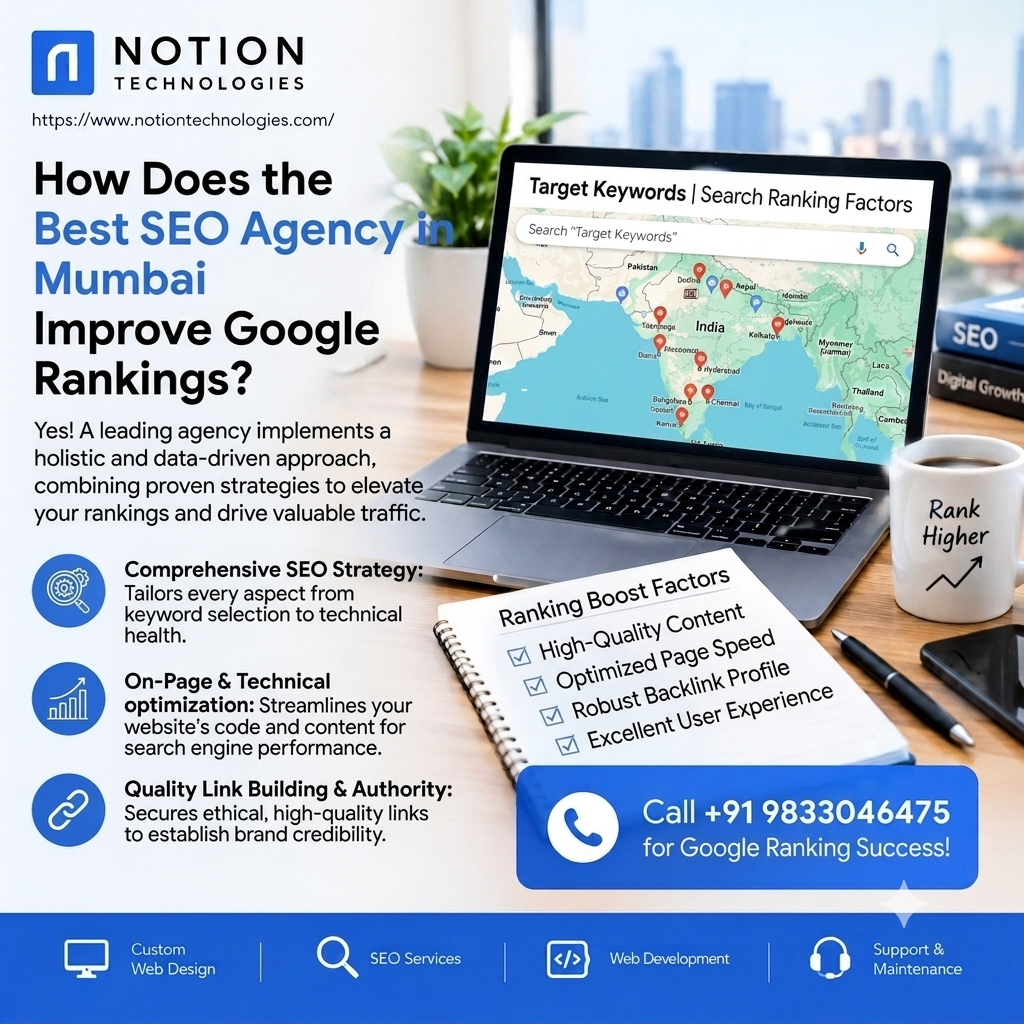
Introduction Achieving higher positions on Google is essential for businesses that want to increase online visibility, attract potential customers, and generate consistent leads. However, improving search rankings requires more than adding keywords to website pages. Businesses need a comprehensive search engine optimization strategy that combines technical improvements, valuable content, keyword research, user experience, and ongoing performance analysis. The best seo agency in mumbai helps businesses strengthen their digital presence by identifying ranking opportunities, resolving website issues, understanding search intent, and implementing strategies that align with search engine guidelines. With a well-planned SEO campaign, businesses can reach relevant audiences, compete effectively in their industries, and build a sustainable source of organic traffic. This blog explains the key strategies professional SEO agencies use to improve Google rankings and support long-term business growth. Understanding How Google Rankings Work Google uses automated systems to discover, understand, and rank web pages based on their relevance, quality, and usefulness for a particular search. Its systems consider numerous signals, including content relevance, page accessibility, links, usability, and the context of a user’s query. SEO helps businesses make their websites easier to discover and understand while providing useful information to their target audience. Although no agency can guarantee a specific ranking, a structured optimization strategy can improve a website’s eligibility to appear for relevant searches. Professional SEO typically focuses on: Understanding the target audience Identifying relevant search queries Improving website structure Creating helpful content Resolving technical issues Earning relevant backlinks Monitoring organic search performance These activities work together to establish a stronger foundation for search visibility. Conducting Comprehensive Website Audits A website audit helps identify the problems and opportunities affecting organic search performance. Before implementing changes, SEO professionals examine the website’s current condition and determine which improvements are most important. An audit may evaluate: Website loading speed Mobile responsiveness Indexing and crawling issues Broken links and redirects Duplicate content Page titles and meta descriptions Internal linking structure Content quality Website security Tools such as Google Search Console, Google Analytics, PageSpeed Insights, and website crawling software can help uncover potential issues. After the audit, specialists prioritize improvements based on their likely impact, technical complexity, and business relevance. Fixing significant indexing problems or improving important landing pages may be more valuable than making minor changes across low-priority pages. This approach ensures that SEO efforts are directed toward measurable opportunities instead of random website adjustments. Performing Strategic Keyword Research Keyword research helps businesses understand what potential customers search for when looking for products, services, or information. Targeting appropriate keywords allows website content to connect with users at different stages of their decision-making process. SEO professionals research: High-intent commercial keywords Informational search queries Long-tail keywords Location-specific phrases Industry-related search terms Questions frequently asked by customers For example, a business serving Mumbai may target relevant local searches alongside broader industry terms, depending on its service area and audience. Keyword selection should consider search intent, competition, business relevance, and the content needed to satisfy the query. High search volume alone does not make a keyword valuable if it attracts visitors who are unlikely to become customers. A well-organized keyword strategy assigns suitable terms to relevant pages and avoids creating multiple pages that compete for the same search intent. Optimizing On-Page SEO Elements On-page SEO helps search engines understand the topic and purpose of individual web pages. It also helps visitors identify relevant information quickly. A professional optimization process may include: Writing descriptive title tags Creating useful meta descriptions Organizing headings logically Improving URL readability Adding relevant internal links Optimizing image alt text Using target keywords naturally Making content easier to read Title tags should clearly communicate each page’s main topic without unnecessary repetition. Headings should organize the content logically, while internal links connect users to related information. Meta descriptions can help communicate a page’s value in search results, although Google may generate a different snippet depending on the query. They are best written to accurately summarize the page rather than treated as a direct ranking factor. Effective on-page SEO combines clarity, relevance, and usefulness instead of relying on excessive keyword placement. Creating High-Quality, Helpful Content Content plays an important role in helping search engines understand a website and determining whether a page meets a user’s needs. Pages that provide original, relevant, and useful information can attract visitors and establish credibility. SEO agencies develop content strategies based on audience questions, search intent, and business objectives. Content formats may include: Informative blog articles Detailed service pages Product descriptions Frequently asked questions Comparison guides Case studies Educational resources Each page should have a clear purpose and offer meaningful value. Businesses should avoid publishing repetitive articles created primarily to target minor keyword variations. Content should also demonstrate appropriate experience, expertise, and trustworthiness. This can involve providing accurate information, explaining processes clearly, updating outdated details, and including evidence or examples where relevant. Consistently improving content helps businesses build topical depth and create more useful experiences for potential customers. Improving Technical SEO Technical SEO addresses the website infrastructure that affects crawling, indexing, rendering, and performance. Even valuable content can struggle to appear in search results when technical problems prevent search engines from accessing it properly. The best seo agency in mumbai may improve technical SEO by reviewing several essential areas. Crawling and indexing Specialists check whether important pages can be discovered and indexed. They investigate accidental indexing restrictions, server errors, incorrect robots.txt rules, and other accessibility problems. Website speed They identify performance bottlenecks caused by large images, unnecessary scripts, slow servers, or inefficient resource loading. Improving performance can make the website more responsive for visitors. Mobile usability A responsive website should present essential content and functionality across different screen sizes. Professionals test navigation, text readability, forms, and interactive elements. Canonical tags and redirects Correct canonical tags help communicate preferred URLs, while appropriate redirects guide users and crawlers when pages move. These elements help reduce URL confusion and preserve useful navigation paths. XML sitemaps An accurate XML sitemap can support the discovery of important URLs and help website owners monitor