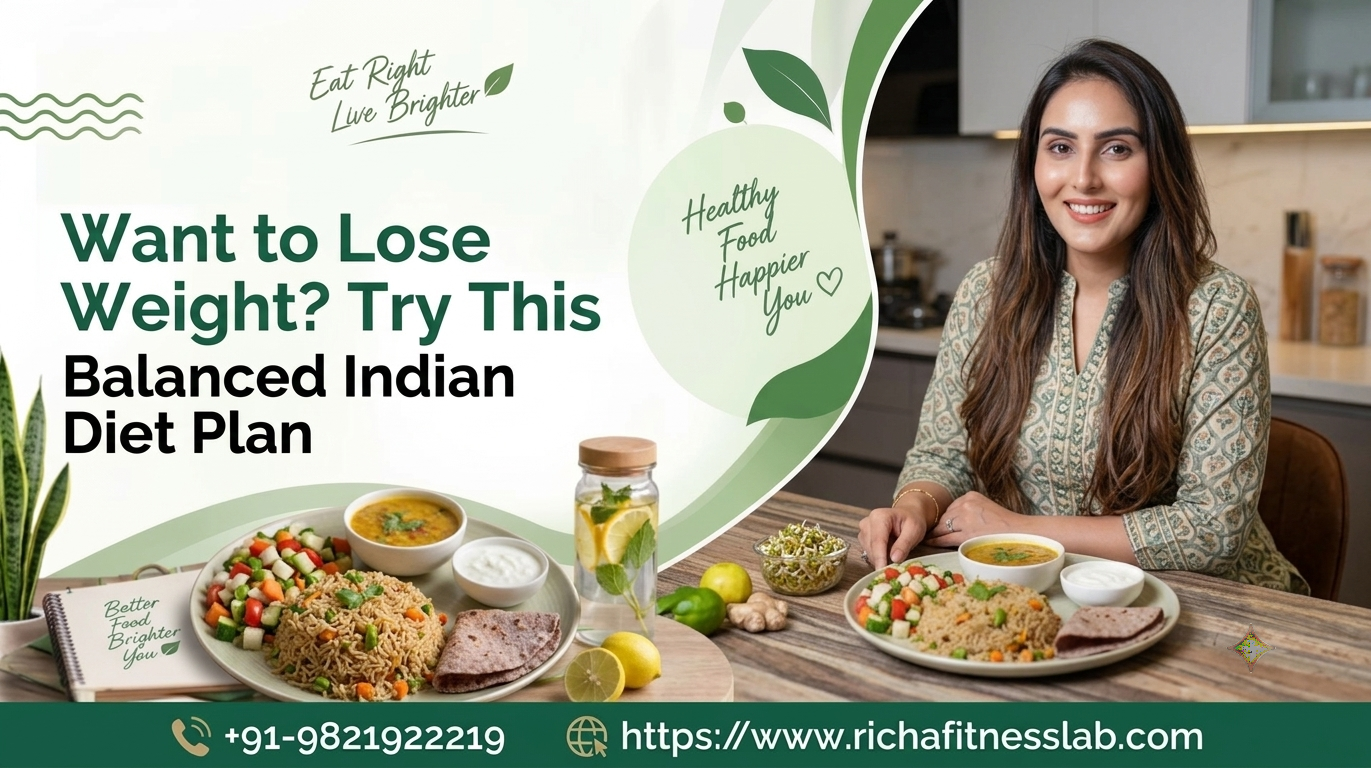
Losing weight does not mean giving up your favourite Indian foods, skipping meals, or following a strict diet that leaves you feeling hungry throughout the day. A well-planned Indian diet plan for weight loss can include roti, rice, dal, vegetables, curd, paneer, fruits, and other familiar foods while supporting gradual, sustainable weight management. The key is to balance your meals, manage portion sizes, choose nutritious ingredients, and develop eating habits that suit your daily routine. Since Indian cuisine offers a wide variety of grains, pulses, vegetables, spices, and protein-rich foods, it is possible to build a satisfying weight loss diet without relying on expensive ingredients or complicated recipes. At Richa Fitness Lab, the focus is on helping individuals understand how balanced nutrition and practical lifestyle changes can support their health goals. A suitable diet plan should consider food preferences, activity levels, daily schedules, and individual nutritional requirements rather than following a one-size-fits-all approach. This guide explains how to create an Indian diet plan for weight loss, what to eat throughout the day, which habits to prioritise, and how to make healthy eating easier to maintain. What Is an Indian Diet Plan for Weight Loss? An Indian diet plan for weight loss is a balanced eating approach that uses traditional Indian foods to support a moderate calorie deficit while providing adequate protein, fibre, vitamins, minerals, and healthy fats. The goal is to consume appropriate portions of nutritious foods without unnecessarily eliminating entire food groups. Depending on your preferences, the plan may include vegetarian, vegan, or non-vegetarian meals. A balanced plan typically includes: Protein: Dal, beans, chickpeas, paneer, tofu, curd, eggs, fish, or chicken. Fibre-rich foods: Vegetables, fruits, whole grains, and legumes. Healthy fats: Nuts, seeds, and appropriate amounts of cooking oils. Complex carbohydrates: Whole-wheat roti, oats, millets, brown rice, and other grains. Hydration: Water throughout the day, adjusted to your needs and activity levels. Weight loss generally occurs when the body uses more energy than it receives from food over time. However, the size of the calorie deficit, nutritional adequacy, sleep, physical activity, and consistency all influence how manageable the process will be. Sample 7-Day Indian Diet Plan for Weight Loss The following table provides a sample meal plan featuring common Indian foods. It can serve as a starting point for planning balanced meals, but it is not a personalised prescription. Day Breakfast Lunch Dinner Monday Vegetable poha with curd 2 rotis, dal, sabzi, salad Moong dal khichdi with curd Tuesday Besan chilla with mint chutney Rice, rajma, cucumber salad Roti, paneer bhurji, vegetables Wednesday Oats with milk and fruit Roti, chana masala, salad Vegetable dalia with curd Thursday Ragi dosa with sambar Rice, dal, bhindi sabzi Roti, tofu curry, vegetables Friday Vegetable upma with curd Roti, mixed dal, seasonal vegetables Vegetable khichdi with salad Saturday Idli with sambar Rice, chicken curry or chickpea curry, vegetables Roti, paneer or tofu, sautéed vegetables Sunday Stuffed vegetable paratha with curd Roti, dal, seasonal sabzi, salad Grilled fish or paneer with vegetables and a small grain portion Mid-morning or evening snacks: Choose options such as fruit, roasted chana, unsalted nuts, plain yoghurt, or sprouts chaat according to your appetite. Adjust the number of rotis, rice portions, cooking oil, and other ingredients to your individual energy requirements. Include sufficient protein at each main meal, and avoid treating this sample menu as a fixed calorie-controlled plan. What to Eat for Weight Loss in an Indian Diet? 1. Choose Balanced Breakfast Options Breakfast can help you start the day with a combination of energy, protein, and fibre. Instead of relying exclusively on tea, biscuits, or sugary breakfast foods, choose meals that provide more nutritional value. Vegetable poha with curd, besan chilla, idli with sambar, oats with milk, or eggs with whole-wheat bread are all practical choices. Combining protein and carbs can enhance meal balance and possibly prolong feelings of fullness. 2. Build a Balanced Indian Lunch Lunch is an opportunity to combine traditional foods into a nutritious meal. A practical plate may contain vegetables, a protein source, whole grains, and a small amount of healthy fat. You may have two little rotis with cucumber salad, seasonal sabzi, and dal, for instance. Alternatively, a bowl of rajma or chole with a suitable portion of rice and vegetables can provide carbohydrates, protein, and fibre. The appropriate portions depend on your body size, activity level, appetite, and overall daily requirements. You do not need to remove rice or roti simply because you want to lose weight. 3. Prioritise Protein at Every Main Meal Protein helps maintain muscular mass and enhances the flavour of meals. . Including sufficient protein is particularly useful when weight loss is combined with strength training or other regular exercise. Indian protein-rich foods include: Dal, rajma, chole, and other pulses. Paneer, tofu, milk, and curd. Eggs, chicken, and fish. Soybeans and other soy-based foods. Vegetarian meals may require thoughtful combinations and adequate portions to meet protein needs. People with kidney disease or other conditions affecting protein requirements should seek individualised medical or dietetic advice. 4. Include Vegetables and Fruits Daily Vegetables and fruits supply fibre, vitamins, minerals, and a variety of beneficial plant compounds. They also add colour, texture, and volume to meals. Choose seasonal produce such as spinach, carrots, cauliflower, beans, gourds, tomatoes, apples, oranges, guavas, and papaya. Whole fruits are generally preferable to fruit juice because they retain their fibre and tend to be more filling. Try to include vegetables at lunch and dinner and eat different fruits throughout the week. Fresh, frozen, and appropriately prepared seasonal produce can all contribute to a balanced diet. 5. Make Smarter Snack Choices Snacking is not automatically harmful to weight loss. What matters is your overall intake, food choices, and hunger patterns. If you feel hungry between meals, consider roasted chana, fruit with yoghurt, a small portion of nuts, sprouts chaat, or boiled eggs. These options can offer more nutrients than frequently eating biscuits, fried snacks, or sweets. You do not need to snack if you are