Stock market information is an important part of many websites, applications, and financial projects. Investors want to follow prices, developers need data for applications, and businesses may want to create tools that help users understand market movements. Getting this information manually, however, can be difficult and time-consuming.
A Stock Market Data API provides a simple way to access financial information through software. Instead of collecting stock prices manually, developers can send requests to an API and receive structured market data that can be used inside websites, mobile apps, dashboards, and other tools.
For beginners, using a free stock data API can be a practical way to learn how financial data works without immediately paying for a premium service. It can also help developers test ideas and create prototypes before moving to a larger plan.
This guide explains what a free stock data API is, how it works, what information you can get, and what you should consider before using one.
What Is a Free Stock Data API?
A free stock data API is a service that allows developers to access selected stock market information without paying for an initial subscription.
How Does a Stock API Work?
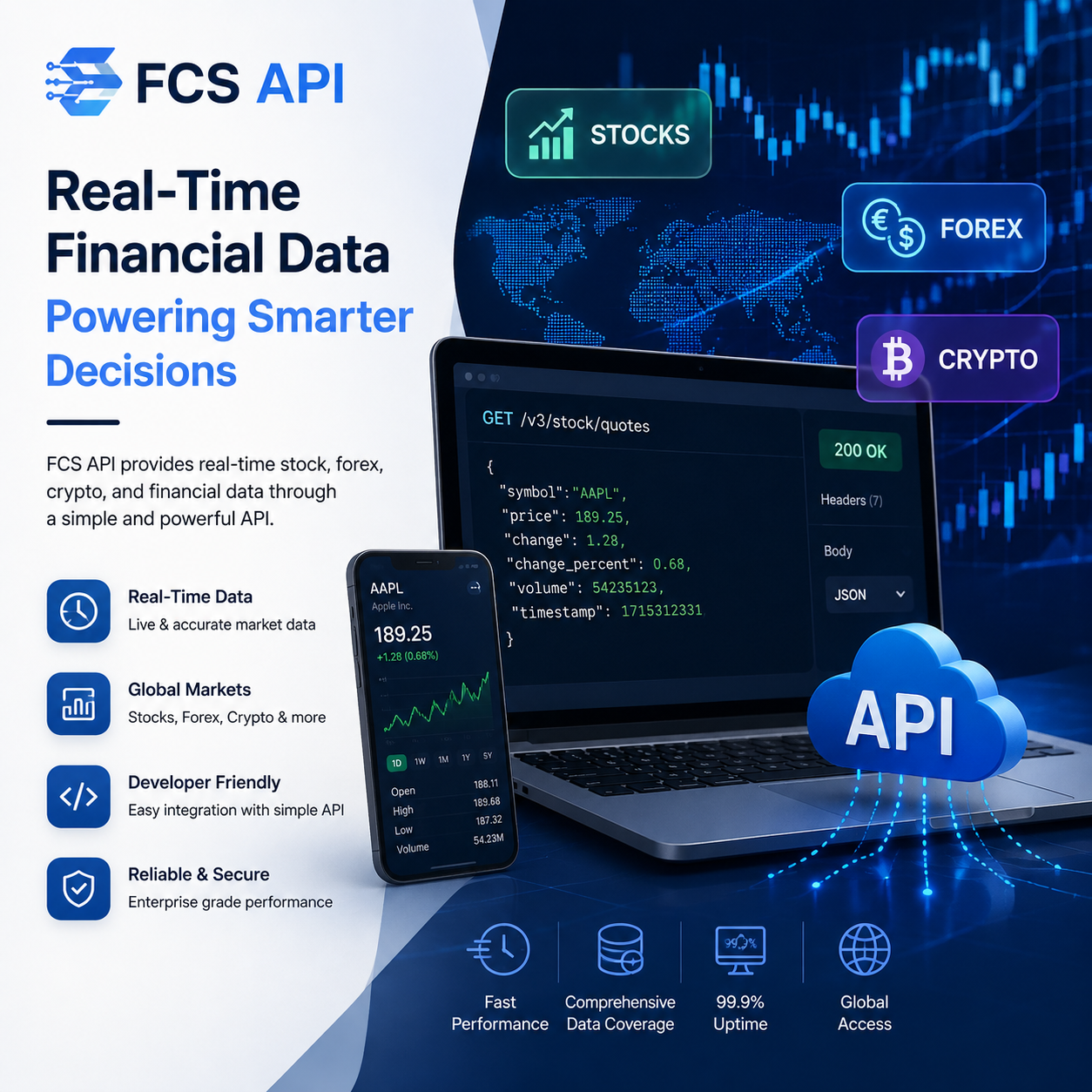
The basic idea is simple. A website or application sends a request to the API asking for specific market information. The API processes the request and sends a response back.
For example, a developer may ask for information about a particular stock. The API could return its available price, percentage change, trading volume, and other related information.
The application can then display the information to users in a table, chart, dashboard, or stock widget.
Why Is It Useful?
Without an API, developers would need to find another way to collect and update financial information. This becomes difficult when dealing with many stocks and frequently changing prices.
An API provides an automated way to retrieve information, allowing developers to focus on building useful features instead of manually maintaining market data.
What Type of Stock Market Data Can You Get?
The information available through an API depends on the provider and plan.
Current Stock Prices
One of the most common uses of a Stock Market Data API is retrieving current or frequently updated stock prices.
A financial website can use this information to display the latest available prices and percentage changes for selected stocks.
However, beginners should check whether the API provides real-time, near-real-time, or delayed information.
Historical Stock Data
Historical information shows how a stock has performed in the past.
Developers can use historical data to create charts, compare price movements, study trends, and build financial research tools.
The amount of historical data available can vary between providers and plans.
Other Market Information
Depending on the API, you may also find information such as:
- Trading volume
- Open prices
- High and low prices
- Closing prices
- Market indices
- Company information
- ETFs
- Financial news
Some providers also offer data for cryptocurrencies, forex, and commodities.
How to Get Started With a Free Stock Data API
Getting started is usually straightforward, even if you are new to APIs.
Choose an API Provider
First, compare providers and find one that offers the market information you need.
Look at the supported markets, available endpoints, request limits, update frequency, documentation, and pricing plans.
Do not select a provider only because it offers free access. Make sure its data and features match your project requirements.
Create an Account
Many providers require you to create an account before accessing their API.
After registration, you may receive an API key. This key is generally used to identify your application when it makes requests.
Read the Documentation
API documentation explains how to use the service.
It usually includes information about authentication, available endpoints, parameters, request formats, response formats, and error messages.
For beginners, clear documentation is particularly important because it can make the integration process much easier.
Understanding API Endpoints
Endpoints are an important part of working with financial APIs.
What Is an Endpoint?
An endpoint is a specific API location or function used to request a particular type of information.
For example, a provider may have different endpoints for stock prices, historical data, company information, or market news.
When your application sends a request to an endpoint, the API knows what type of information it needs to return.
Using Parameters
Parameters allow you to customize your request.
For example, you may need to provide a stock symbol to tell the API which stock you want information about.
You may also need parameters for dates, time periods, markets, or other requirements.
The provider’s documentation will explain which parameters are required.
Understanding API Responses
After your application sends a request, the API returns a response.
JSON Data
Many financial APIs return information in JSON format. JSON is a structured format that allows applications to read and process data easily.
A response may contain fields such as the stock symbol, price, date, trading volume, and percentage change.
Your website or application can read these values and display them in a format that users can understand.
Handle Errors Properly
Not every API request will be successful.
For example, a request may fail because the stock symbol is incorrect, the API key is invalid, the request limit has been reached, or the service is temporarily unavailable.
Your application should be designed to handle these situations and show users a useful message instead of a broken page.
Building Projects With a Free Stock Data API
A free stock data API can support many different types of projects.
Stock Price Trackers
A beginner can create a simple stock tracker that allows users to search for a stock and view its available market information.
This is a good project for learning how API requests and responses work.
Financial Dashboards
Developers can combine multiple pieces of data to create a financial dashboard.
A dashboard might display stock prices, percentage changes, trading volume, market indices, and charts.
This gives users a central location for monitoring market information.
Stock Screeners
Stock screening tools allow users to filter stocks according to selected conditions.
Depending on the data provided by the API, developers can create filters based on price, trading volume, market capitalization, percentage change, or other available metrics.
Educational Projects
Students and beginners can use financial data APIs to create educational projects.
For example, a project could display historical stock prices and demonstrate how prices change over different periods.
This provides practical experience with both programming and financial data.
Benefits of Using a Free Stock Data API
There are several reasons why beginners and small businesses may choose a free API.
Lower Initial Cost
A free plan allows developers to experiment without immediately paying for financial data.
This can be useful when a project is still in the testing stage.
Easy Experimentation
Developers can try different API endpoints and learn how financial data is structured.
This experimentation can help them understand what features they need before choosing a long-term plan.
Useful for Prototypes
A free stock data API can provide enough information to build an early version of an application.
Once the prototype is tested, developers can decide whether additional features or higher request limits are required.
Limitations of Free Stock Data APIs
Free access can be useful, but it is important to understand its limitations.
Request Limits
Free plans often limit how many API requests an application can make.
A small project may stay within the limit, but a website with many visitors could reach it quickly.
Delayed Data
Some free plans may provide delayed rather than real-time market data.
If your application requires current prices, carefully check the provider’s data update policy.
Limited Features
Free plans may provide fewer endpoints or less historical data than paid plans.
They may also have restrictions on commercial usage.
Always review the provider’s terms before using free API access for a business application.
How to Choose the Right Free Stock Data API
Choosing an API requires more than checking whether it is free.
Check Data Coverage
Make sure the API supports the stocks, exchanges, markets, and asset types you need.
If you plan to expand your project, broader coverage can be helpful.
Check Documentation
Look for documentation that clearly explains how to authenticate, send requests, use parameters, and understand responses.
Good documentation can save development time.
Check Usage Limits
Understand how many requests are available and whether the limit is daily, monthly, or based on another measurement.
This helps you determine whether the free plan is suitable for your project.
Check Data Freshness
If your application displays market prices, check how frequently the provider updates its information.
Do not assume that free access automatically means real-time data.
Exploring More Than Stock Data
A financial application may eventually need information from several markets.
Multiple Asset Classes
FCS API is a financial information platform that provides financial market data across cryptocurrencies, stocks, forex, commodities, ETFs, and indices.
This broader coverage can be useful for developers building applications that allow users to monitor multiple financial markets.
For example, a single financial dashboard could display stock prices, currency rates, cryptocurrency information, commodity prices, and market indices.
Charts and Financial Information
FCS API also provides charts, financial news, economic updates, and educational content. These features can support websites and applications that want to provide users with more than basic price information.
The specific data and access available depend on the API service and selected plan.
Tips for Beginners
If you are using a Stock Market Data API for the first time, start with a small project.
Start With One Endpoint
Do not try to build a complicated financial platform immediately. Begin by retrieving information for one stock and displaying the response.
Once you understand the process, add more features.
Monitor Your API Usage
Keep track of how many requests your application makes. This is especially important when using a free plan with limited requests.
Protect Your API Key
Do not unnecessarily expose your API credentials in public code. Use appropriate security practices to protect your account and API access.
Final Thoughts
A free stock data API can be an excellent starting point for anyone who wants to learn about financial market data or build a financial project. It provides a way to retrieve stock information automatically and use it in websites, mobile applications, dashboards, charts, screeners, and educational tools.
A Stock Market Data API can also save developers time by providing structured access to market information instead of requiring manual data collection. However, beginners should pay attention to data coverage, update frequency, API limits, documentation, security, and usage terms.