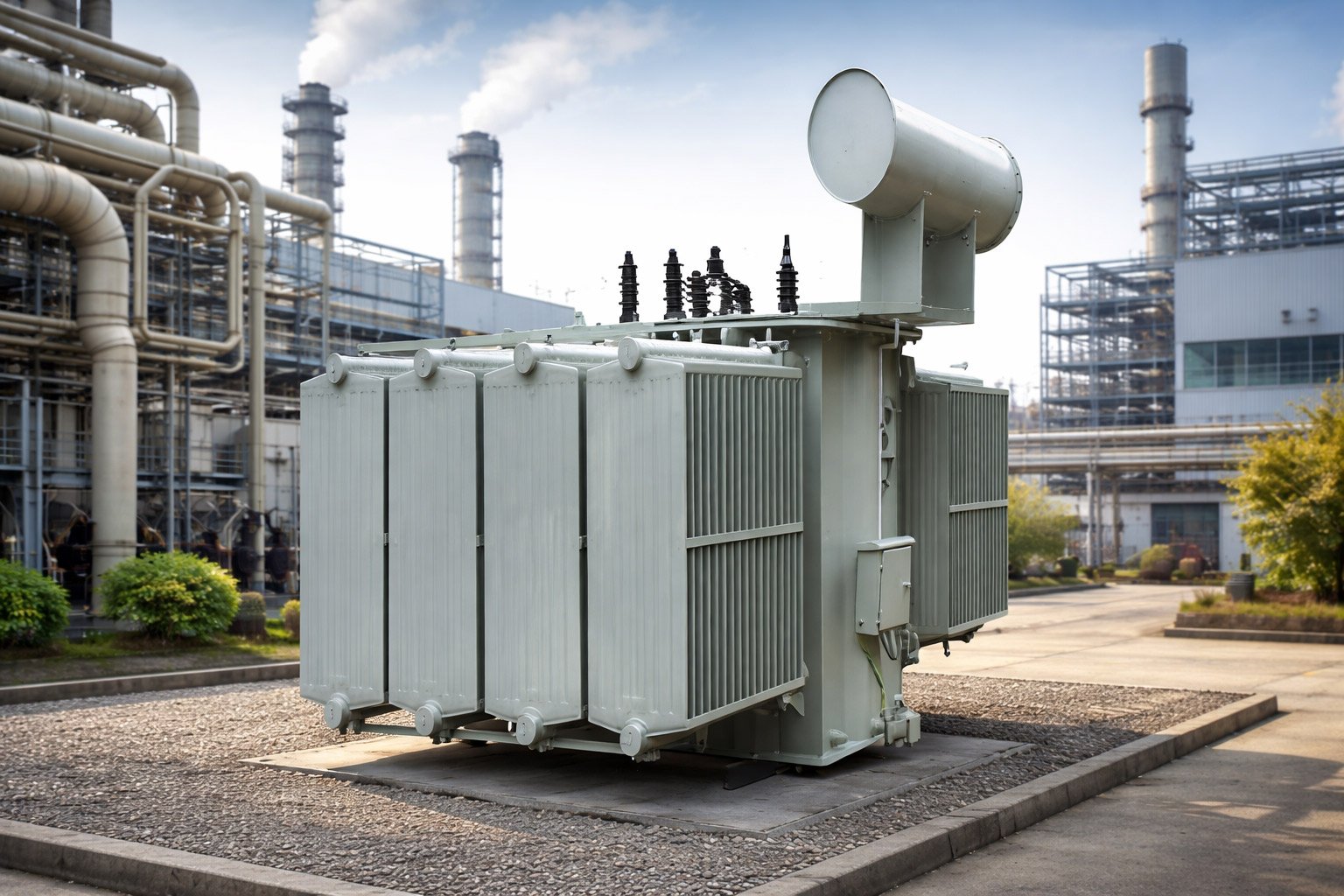
Reliable electricity distribution is essential for homes, commercial buildings, industrial facilities, and public infrastructure. As cities expand and industrial activities grow, electrical grids must handle increasing demand while maintaining stable and efficient power delivery. Transformers play a central role in this process by adjusting voltage levels to support the safe transmission and distribution of electricity.
For utility providers, contractors, infrastructure developers, and industrial project managers, choosing the right transformer is an important decision. Working with a dependable transformer manufacturer in Guwahati can help project teams identify suitable equipment for regional grid requirements, site conditions, and operational demands.
Guwahati is an important commercial and infrastructure centre in Northeast India. Its surrounding areas support a range of residential, industrial, commercial, and public utility developments that depend on reliable electrical infrastructure. Selecting an appropriate transformer requires careful attention to capacity, voltage ratings, efficiency, safety features, and long-term maintenance.
Why Transformers Are Essential for Electrical Grid Projects
Transformers transfer electrical energy between circuits through electromagnetic induction. Their primary purpose in power systems is to increase or decrease voltage levels according to the requirements of transmission, distribution, and end-use applications.
Electricity is generally transmitted over long distances at high voltages to reduce energy losses. Before it reaches homes, offices, factories, and other consumers, transformers lower the voltage to suitable distribution levels.
In grid infrastructure, transformers support several important functions:
- Voltage regulation: They help electrical networks operate at the voltage levels required by connected equipment.
- Efficient power transmission: Higher transmission voltages reduce current for a given power level, helping limit resistive losses.
- Electricity distribution: Distribution transformers supply power at suitable voltage levels to residential and commercial consumers.
- Industrial operations: Specially selected transformers support machinery, processing equipment, and other electrical loads.
- Network reliability: Properly specified and maintained transformers help reduce equipment-related interruptions.
The performance of a transformer depends on more than its rated capacity. Correct selection, installation, protection, and maintenance are all necessary for dependable grid operation.
Choosing a Transformer Manufacturer in Guwahati
A suitable manufacturing partner should understand the technical requirements of the project and provide clear information about equipment specifications, quality checks, documentation, and after-sales support.
When evaluating a transformer manufacturer in Guwahati, project owners should consider the following factors.
1. Product Range and Application Suitability
Different grid projects require different transformer configurations. A transformer intended for a distribution network may not be appropriate for a high-capacity substation or a specialised industrial application.
Before selecting a manufacturer, confirm whether its available products match the intended use. Depending on the project, requirements may include distribution transformers, power transformers, oil-immersed transformers, or dry-type transformers.
The equipment must be suitable for the specified voltage levels, load requirements, installation environment, and operating conditions.
2. Technical Specifications and Engineering Support
Transformer specifications determine how well the equipment will perform within the electrical network. Important parameters include:
- Rated capacity, usually expressed in kVA or MVA
- Primary and secondary voltage ratings
- Frequency and phase configuration
- Winding material and design
- Impedance and permissible temperature rise
- Insulation system and cooling method
- Tap-changing requirements
- Applicable protection and monitoring provisions
Project teams should provide the manufacturer with accurate load information and system requirements. This allows the equipment to be selected according to actual operating conditions rather than assumptions.
3. Manufacturing Quality and Testing
Transformer reliability depends heavily on material quality, manufacturing precision, insulation integrity, and assembly standards.
Before finalising a supplier, ask about its quality-control procedures and the tests applicable to the proposed transformer. Depending on the design and relevant standards, these may include winding resistance measurement, voltage-ratio testing, insulation checks, impedance measurement, and no-load and load-loss tests.
Routine and additional tests should be agreed upon in the technical specification. Buyers should also review the test reports and applicable compliance documentation before accepting the equipment.
4. Documentation and Project Coordination
Grid projects often involve utilities, electrical contractors, consultants, civil engineering teams, and commissioning personnel. Clear documentation helps these stakeholders coordinate their work.
A manufacturer should be able to clarify which documents are included with the equipment. These may cover technical drawings, nameplate information, test reports, installation instructions, and maintenance recommendations.
Delivery schedules, inspection arrangements, packing requirements, and site access should also be discussed early to minimise avoidable delays.
Types of Transformers Used in Grid Projects
Understanding the main transformer categories makes it easier to match equipment to the project’s electrical requirements.
Power Transformers
Power transformers are commonly used at generating stations and substations where electrical networks require substantial voltage transformation. Their capacity, insulation system, cooling arrangement, and protection requirements depend on the network design.
For large infrastructure projects, engineers must evaluate load demand, fault levels, operating conditions, and future expansion plans before finalising the transformer specification.
Distribution Transformers
Distribution transformers reduce medium-voltage electricity to lower voltage levels for supply to end users. They are widely used in residential developments, commercial areas, industrial facilities, and local distribution networks.
Correct sizing is important. An undersized transformer may experience excessive loading, while an unnecessarily oversized unit can increase initial costs and affect operating efficiency under light-load conditions.
Oil-Immersed Transformers
Oil-immersed transformers use insulating liquid for electrical insulation and heat transfer. They are commonly considered for outdoor substations and distribution applications, subject to the project’s technical and safety requirements.
Installation planning should account for liquid containment where required, fire protection, clearances, inspection access, and applicable environmental provisions.
Dry-Type Transformers
Dry-type transformers use air or another solid insulation arrangement rather than an insulating liquid as their primary cooling and insulation medium. They may be suitable for indoor installations, commercial buildings, and selected industrial environments.
Their suitability depends on ventilation, enclosure requirements, ambient temperature, fire-safety considerations, and the electrical load.
Key Considerations for Grid Projects in Guwahati
Electrical infrastructure in Guwahati and the wider Northeast region must be planned around the specific conditions of each installation. Weather exposure, site accessibility, electrical demand, and maintenance arrangements can influence transformer selection.
Weather and Environmental Conditions
The region experiences a monsoon season, so outdoor electrical equipment may need appropriate protection against moisture, water ingress, corrosion, and contamination.
Project teams should assess drainage, foundation elevation, enclosure protection, ventilation, and access during adverse weather. Equipment specifications should reflect the actual installation environment.
Load Growth and Future Expansion
Electricity demand can change as residential areas develop, businesses expand, and new industrial facilities become operational.
Load forecasting helps engineers choose a transformer capacity that meets present requirements while allowing for realistic future demand. Expansion plans should also consider spare capacity, substation layout, feeder arrangements, and the possibility of adding further equipment.
Safety and Regulatory Compliance
Transformer installations must comply with applicable electrical safety requirements, utility specifications, and relevant Indian standards.
Depending on the installation, important considerations include earthing, lightning and surge protection, overcurrent protection, differential protection where applicable, safe clearances, and fire-safety measures.
The final design should be reviewed by qualified electrical professionals and coordinated with the relevant utility or approving authority.
How to Select the Right Transformer Capacity
Transformer capacity should be based on the expected electrical load, load diversity, power factor, starting currents, and anticipated demand growth.
For a three-phase system, apparent power can be estimated using the following relationship:
kVA = (√3 × Line Voltage × Line Current) ÷ 1,000
Here, voltage is measured in volts and current in amperes.
This calculation helps estimate the apparent power associated with a known three-phase load. However, it does not replace a complete engineering assessment. Engineers must also consider demand patterns, harmonics, ambient conditions, overload requirements, and the consequences of equipment failure.
For example, a facility with large motors may experience high starting currents, while a distribution network serving mixed residential loads may have a different demand profile. Both situations require careful analysis before selecting a transformer rating.
Avoid choosing equipment based only on the total connected load. A documented load assessment provides a more reliable basis for selection.
Transformer Efficiency and Long-Term Operating Costs
The purchase price is only one part of a transformer’s total cost. Energy losses, maintenance, downtime, and expected service life also influence the overall investment.
Two important categories of transformer losses are:
- No-load losses: These occur when the transformer is energised, even when it supplies little or no external load.
- Load losses: These mainly arise from current flowing through the windings and vary with loading.
Comparing guaranteed loss values can help project owners understand the likely operating cost of different transformer options. A transformer with a lower initial price may not provide the lowest lifetime cost if its losses are higher.
Buyers should evaluate efficiency data alongside purchase cost, expected loading, electricity tariffs, maintenance requirements, and the intended operating period.
Installation, Testing, and Maintenance
Even a well-manufactured transformer requires correct installation and ongoing inspection. Poor connections, unsuitable foundations, inadequate ventilation, incorrect protection settings, and neglected maintenance can compromise performance.
A practical installation and maintenance plan should include:
- Site preparation: Confirm foundation strength, access, drainage, clearances, and ventilation.
- Pre-installation inspection: Check the nameplate, physical condition, accessories, and accompanying documentation.
- Electrical testing: Complete the specified pre-commissioning tests and verify connections and earthing.
- Protection checks: Confirm that protective devices and settings are appropriate for the system design.
- Routine monitoring: Inspect connections, temperature indicators, cooling equipment, and any signs of leakage or unusual noise.
- Scheduled maintenance: Follow the manufacturer’s instructions and the maintenance plan established by qualified personnel.
Oil sampling, insulation testing, and additional diagnostic checks may be appropriate depending on transformer type, operating history, and condition. Maintenance intervals should be based on the equipment instructions and the project’s operating requirements.
The Role of Prabha Power in Transformer Selection
For project teams evaluating electrical equipment for regional infrastructure, Prabha Power is a relevant brand to consider during the transformer sourcing process. Buyers should assess the specific products and technical capabilities offered against their project’s documented requirements.
When discussing a potential supply arrangement, project managers can prepare a clear specification covering transformer capacity, voltage ratio, installation conditions, applicable standards, testing requirements, delivery expectations, and after-sales support.
This approach makes supplier comparisons more meaningful and helps ensure that technical suitability remains the priority. Rather than focusing only on price, buyers should evaluate the complete offering, including documentation, testing, installation coordination, and long-term service considerations.
Frequently Asked Questions
1. What should I look for in a transformer manufacturer in Guwahati?
Look for a supplier whose products match your project’s voltage and capacity requirements. Review technical documentation, applicable standards, quality-control procedures, testing facilities, delivery commitments, and after-sales support before making a decision.
2. Which type of transformer is used for electrical grid projects?
Power transformers are commonly used in substations and high-capacity electrical networks, while distribution transformers supply electricity at lower voltage levels to consumers. The appropriate type depends on the network design, load requirements, and installation conditions.
3. How do I determine the correct transformer capacity?
Capacity is determined by assessing the expected load, power factor, demand patterns, starting currents, and future expansion requirements. A qualified electrical engineer should verify the final rating and ensure that the transformer suits the network’s operating conditions.
4. Why is transformer efficiency important for grid infrastructure?
Transformer losses contribute to ongoing energy costs throughout the equipment’s operating life. Comparing no-load and load losses helps buyers evaluate operating expenses and choose equipment that offers an appropriate balance between initial investment and long-term performance.
5. How often should a transformer be maintained?
Maintenance frequency depends on the transformer design, operating environment, loading, manufacturer recommendations, and observed condition. Regular inspections and scheduled electrical tests help identify potential problems before they lead to equipment failure.
Conclusion
Selecting the right transformer is a fundamental part of building a reliable and efficient electrical grid. Project owners should evaluate capacity, voltage ratings, efficiency, manufacturing quality, safety compliance, environmental conditions, and maintenance requirements before choosing a supplier.
For infrastructure developers and electrical contractors seeking a transformer manufacturer in Guwahati, a structured evaluation process can support better purchasing decisions and more dependable project outcomes. Prabha Power can be considered as part of this sourcing process, with the final selection guided by verified product specifications, testing documentation, and the project’s technical requirements.